How Much Mash Does Cottage Pie Need?
By Michael
Too little mash and the filling bubbles up through the gaps and stains the top. Too much and every forkful is plain potato with barely any beef underneath. The tested recipe on this site uses 900g of potatoes for four people, and that one number is the anchor for every batch size in this guide.
The mash in the tested recipe
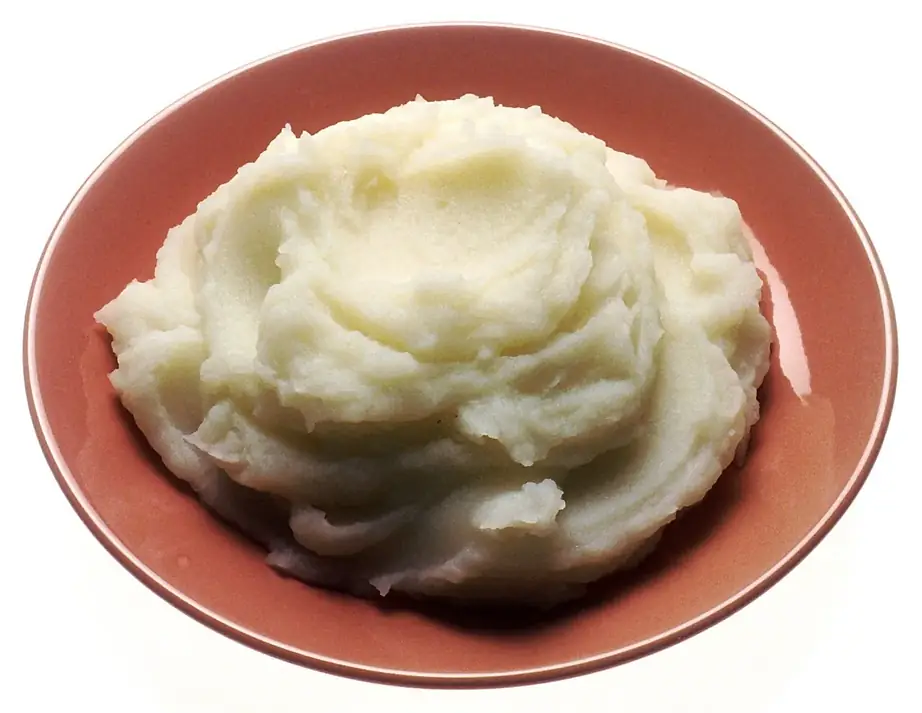
Everything in this guide is scaled from one recipe that has actually been cooked and checked: our cottage pie recipe. For four servings it uses 900g of floury potatoes — Maris Piper or King Edward — with 50g of butter and about 75ml of warm milk, over a filling made from 500g of beef mince. The pie is built in a dish of about 2.5 to 3 litres, roughly 20 × 30 cm.
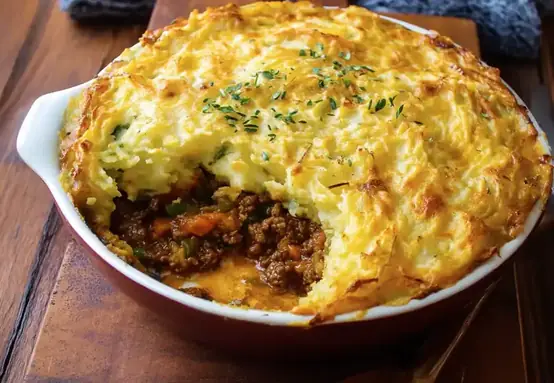
Those numbers sit in a comfortable middle. The mash is generous enough to cover the filling completely, with fork ridges that catch the heat and brown, but it is not a deep slab. When you cut a portion, the topping holds together and the filling is clearly the main event underneath it. If you scale the pie up or down, keep the same proportions and you keep the same balance.
The per-person rule: about 225g of potatoes
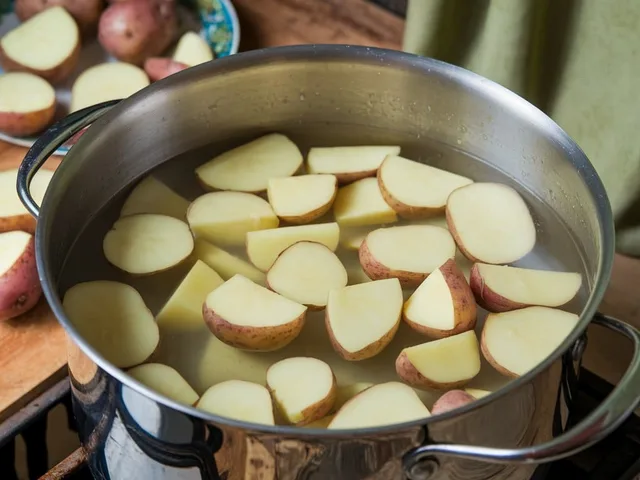
Dividing the tested recipe by its servings gives the simplest working rule: about 225g of potatoes per person. Weigh them before peeling, as you bought them. Peeling takes off roughly a tenth of the weight, and a little more disappears if you trim eyes and blemishes, so 225g of unpeeled potatoes lands at around 200g in the pan — a solid portion once butter and milk go in.
Appetites differ, and the rule bends without breaking. For smaller appetites or young children, 175g to 200g per person is plenty. For hungry adults, or a pie that will be served with only a few vegetables on the side, go up to 250g per person. What matters is that you adjust the butter and milk in step, using the table below, rather than adding potatoes alone and ending up with a dry, stodgy topping.
One more thing to weigh correctly: judge the amount by weight, not by counting potatoes. Potatoes vary far too much in size for counting to work. One very large baking potato can weigh as much as three small ones, and a pie built on a guess like "two potatoes each" can come out with half the topping it needs.
Mash quantities for 1, 2, 4, 6 and 8 servings
The figures in this table are simple arithmetic from the tested recipe — the quantities for four are the tested ones, and the rest are scaled in proportion. Dish sizes for the other servings are guidance based on the same depths as the tested pie, not separately tested recipes.
| Servings | Potatoes | Butter | Warm milk | Dish size (guide) |
|---|---|---|---|---|
| 1 | 225g | about 15g | about 20ml | about 0.6 to 0.75 litres |
| 2 | 450g | 25g | about 40ml | about 1.2 to 1.5 litres |
| 4 | 900g | 50g | about 75ml | about 2.5 to 3 litres |
| 6 | 1.35kg | 75g | about 110ml | about 4 litres |
| 8 | 1.8kg | 100g | about 150ml | about 5 to 6 litres, or two standard dishes |
Milk is the figure to treat most loosely. Potatoes vary in how much liquid they take up, so add the milk gradually and stop when the mash is soft and spreadable — it should fall off the spoon in a slow dollop, not pour. The butter figure scales cleanly, because it is about richness as much as moisture. If you are choosing a dish for a bigger or smaller pie, the fuller workings are in our guide to what size dish you need for cottage pie.
How thick should the mash layer be?
Weight only tells half the story, because the same mash spread over a wider dish makes a thinner layer. The tested pie gives the reference points: its filling sits about 2.5 cm deep in the dish, and the finished pie is about 4.5 to 5 cm deep in total. That means the mash layer itself is roughly 2 to 2.5 cm — the thickness the 900g produces in a 20 × 30 cm dish.
Aim for that thickness whatever dish you use. Around 2 cm is the minimum for a complete, even cover that seals the filling in. Somewhere near 2.5 cm is the comfortable top end for a standard pie. If your dish is much wider than the standard, the mash spreads thinner, so either use a little more mash or accept a thinner, crisper topping. If your dish is narrow and deep, the opposite happens — check the layer with the back of a spoon as you spread, and hold some mash back rather than piling it all on.
Signs you have used too little mash
A pie short of mash shows it in the oven and on the plate. The filling bubbles up through gaps in the cover, especially round the edges, and the escaping gravy stains the top in patches instead of the mash browning evenly. You will see bare patches where the filling shows through, and those exposed spots dry out and darken while the rest of the pie is still coming up to temperature.
On the plate, a thin topping cannot hold a portion together. The slice slumps, the filling spills out, and the ratio in every forkful is mostly beef with a scraping of potato. If your last pie ate like a bowl of mince with a potato lid that vanished, it needed more mash — or the same mash spread over a smaller dish.
Signs you have used too much mash
Too much mash is the quieter fault, but it unbalances the pie just as much. Forkful after forkful of plain potato, with the filling lost underneath. The top can brown and look magnificent while the filling below is still catching up, because a thick layer of mash insulates the filling from the oven's heat — so the centre needs checking, not just the colour of the top.
A very deep topping also tends to slide. When you cut in, the mash comes away in a slab instead of staying with the portion, and leftovers reheat unevenly, with the top drying out before the middle is hot. If any of that sounds familiar, the fix is rarely a different recipe — it is a wider dish, or a little restraint with the potato pan.
Getting the mash on: spreading counts too
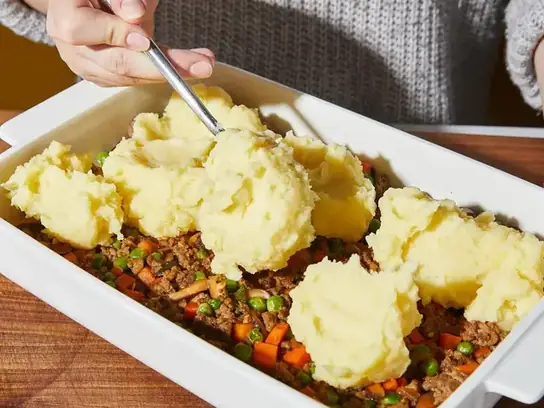
The right amount of mash can still leave gaps if it goes on badly. Spoon it over the filling in blobs, working from the edges towards the middle, rather than tipping it all into the centre and dragging it outwards — dragging pulls the filling up through the topping and thins the edges, which is exactly where cover matters most. Push the mash right to the rim of the dish and seal it against the sides; that seal is what stops the filling bubbling up and over during baking.
Keep the mash warm while you work. Mash that has gone cold turns stiff and tears the surface of the filling as you spread it, so assemble the pie while both parts are still warm. Finish with a fork, drawing ridges across the top: the ridges add crisp edges, and they make the depth easy to judge — if you cannot raise ridges, the layer is too thin.
The kind of potato matters as much as the amount
The 225g rule assumes floury potatoes. Floury varieties such as Maris Piper and King Edward break down into a fluffy mash that spreads easily and gives plenty of volume for its weight. Waxy potatoes make a denser, heavier mash that sits more solidly on the pie, so the same weight can taste like more. Weight for weight the quantities do not change, but the result does — if you want the topping from the tested recipe, use the floury potatoes it was built on. Our guide to the best potatoes for cottage pie mash compares the main varieties and what each does to the topping.
What to do with leftover mash
If you boiled too many potatoes, the spare mash is anything but a problem. It keeps in the fridge and turns into a second meal with very little work:
Potato cakes. Stir a spoonful or two of plain flour and some seasoning into cold mash, shape into rounds, and fry in a little oil until crisp on both sides. Good with a fried egg on top.
Bubble and squeak. Fry the mash with leftover cooked cabbage or any green vegetables until the bottom is deeply golden and crusty.
Fishcakes. Flake in tinned or leftover cooked fish with chopped parsley, coat in flour, and fry. The mash binds everything without needing egg, though a beaten egg in the mix makes shaping easier.
A topping for another day. Freeze spare mash in portions. Defrost it in the fridge, stir it well — it loosens as it warms — and use it over a small pie.
Whatever you plan for it, treat cooked mash like any other leftover: cool it and get it into the fridge within 1 to 2 hours, keep the fridge between 0 and 5°C, and use the mash within 2 days. Reheat it only once, until steaming hot all the way through.
Questions people ask
Roughly one large potato per person. A big floury potato usually weighs 225g to 250g, while a medium one is nearer 150g, so allow about one and a half medium potatoes each. Weighing is far more reliable than counting, because potato sizes vary so much from bag to bag.
Before peeling, as bought — that is how the tested recipe's 900g is measured. Peeling and trimming removes roughly a tenth of the weight, and the per-person figure of about 225g already allows for that loss, so there is no need to top it up.
Yes — go up to about 300g of potatoes per person if mash is the main event in your house. Spread it in a wider dish rather than building a much deeper layer, keep the butter and milk in proportion, and check the centre of the pie is piping hot before serving, because a thick topping slows the heat reaching the filling.
Usually because the mash was too soft or the filling too wet. Mash should fall off the spoon in a slow dollop, not pour — if it pours, it will slump into the filling. Let the finished filling stand for a few minutes so it settles and firms slightly, then spoon the mash on in blobs and spread it gently rather than pressing down.
Cool it and refrigerate it within 1 to 2 hours of cooking, keep the fridge between 0 and 5°C, and use it within 2 days. When you use it, reheat it only once, until steaming hot all the way through. Mashed potato also freezes well in portions for a month or more.
The weight stays the same — about 225g per person — but the result changes. Floury potatoes such as Maris Piper and King Edward give a light, fluffy mash with plenty of volume, while waxy potatoes make a denser topping that eats heavier at the same thickness. For the balance of the tested recipe, floury potatoes are the right choice.