
Batch-Cooking Cottage Pie: Planning, Portioning and Freezing
By Michael
Cottage pie rewards anyone who cooks it in quantity. The filling freezes well, the mash reheats well, and an hour of work on one day can cover several dinners. This guide turns our kitchen-tested recipe into a simple batch system: how to double it, how to cool it safely, how to portion it, and how to bring it back to the table.
What batch cooking changes — and what it does not
Batch cooking is not a new recipe. It is the same filling and the same mash, made in a larger quantity and divided with a plan. The flavours do not change, the method does not change, and the oven settings do not change: 200°C conventional / 180°C fan / Gas Mark 6.
What changes is the handling around the cooking. A kilogram of mince behaves differently in the pan from 500g. A double quantity of hot filling cools much more slowly than a single pie. And a big dish of pie needs a plan for portioning, or the leftovers sit in the fridge while everyone loses interest.
So this guide follows the batch in order: the quantities, the pan work, the cooling, the portioning, and the reheating. Get those five stages right and the batch looks after itself.
The batch plan
| Batch size | Dish | What changes |
|---|---|---|
| Standard tested batch (serves 4) | One dish of about 2.5 to 3 litres, roughly 20 × 30 cm | Nothing. This is the recipe exactly as tested: prep 20 minutes, cook 1 hour 10 minutes, bake 25 to 30 minutes. |
| Double batch in two dishes (serves 8) | Two dishes of about 2.5 to 3 litres each | Quantities double; the bake stays the tested 25 to 30 minutes per dish. Our recommendation. |
| Double batch in one big dish (serves 8) | One dish of about 5 to 6 litres | Quantities double; the filling sits deeper, so allow a longer bake (estimate) and judge by the centre check, not the clock. |
| Double batch as portions | Shallow lidded containers, one portion each | Quantities double; the pies are portioned before freezing, so you defrost and reheat only what you will eat. |
The honest note: the main recipe was kitchen-tested at the standard size, in the standard dish. The doubled quantities below are that recipe multiplied by two — the ingredients scale exactly — but a double batch has not been separately kitchen-tested as a batch, and the longer bake for one big dish is an estimate. Splitting the batch across two standard dishes is the route that keeps every tested timing intact, which is why we recommend it.
Doubling the quantities
Every ingredient in the tested recipe doubles cleanly. For the filling: 2 tbsp oil, 1kg beef mince, 2 large onions finely chopped, 4 carrots finely diced (about 400g), 4 celery sticks, 4 garlic cloves, 2 tbsp plain flour, 4 tbsp tomato purée, 2 tbsp Worcestershire sauce, 800ml hot beef stock, 2 tsp dried thyme, 2 bay leaves and 200g frozen peas, with salt and black pepper. For the mash: 1.8kg floury potatoes such as Maris Piper or King Edward, 100g butter and about 150ml warm milk.
Two things do not double. The first is the seasoning judgement: add salt and pepper as usual, then taste at the end, because a big pot is harder to season by instinct alone. The second is the simmer. The filling still needs to reduce until the gravy is thick and glossy and coats the mince rather than pooling — in a wider, fuller pan that can take a little longer, so judge by the consistency, not by a doubled clock.
Work in the largest pan you own. The filling for a double batch is a lot of food, and a pan filled to the brim cannot be stirred properly. If your biggest pan is crowded, make the filling in two half batches instead; they can be combined at the end.
Browning a kilo of mince without steaming it
This is the stage where big batches most often go wrong. Mince browns when its surface meets hot, dry metal. Pile a full kilogram into the pan at once and the meat releases more liquid than the pan can evaporate. The mince then boils in its own juices and turns grey and soft instead of brown.
The fix is simple: brown the mince in two or three lots. Heat the oil, add one lot in a loose layer, and leave it undisturbed for a few minutes so a crust forms. Break it up, let it colour further, then lift it out into a bowl and repeat with the next lot. Each lot takes only a few minutes, and the flavour you gain is the whole point of browning.
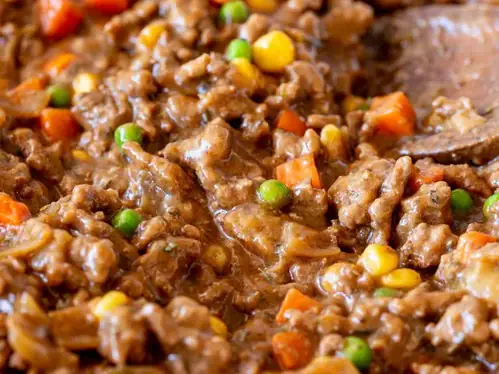
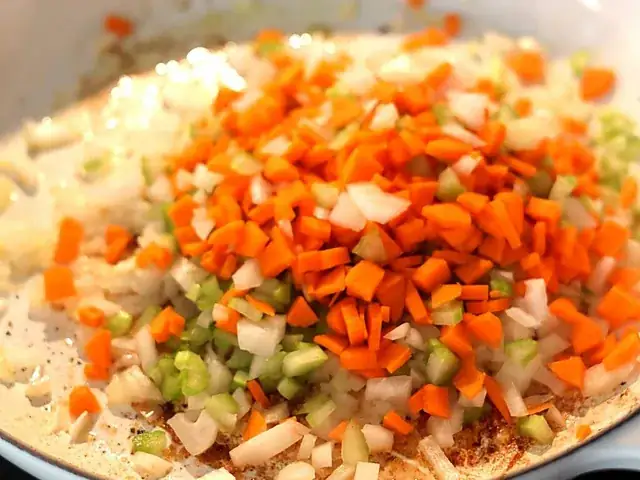
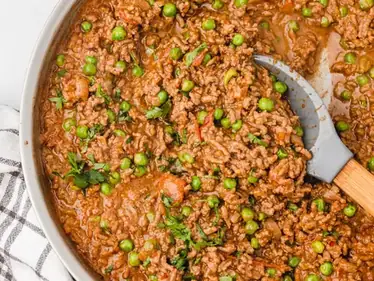
Soften the onion, carrot and celery in the same pan after the last lot of mince comes out, so the vegetables pick up the browned flavour left behind. Then return all the mince, stir in the flour, tomato purée and Worcestershire sauce, and pour in the hot stock. Add the thyme and bay leaves, simmer until thick, and stir the peas through at the end.
Cooling a large batch safely
A double batch holds a lot of heat, and this is the stage that matters most for safety. Cooked food should be cooled and refrigerated within 1 to 2 hours. A deep dish of pie, left whole, can still be warm in the centre long after that window has passed.
So do not cool a batch in the dish it baked in. Spread the filling — or spoon the assembled portions — into shallow trays or shallow lidded containers. A shallow layer loses heat quickly and evenly. Once the food is no longer steaming, cover it and put it in the fridge, which should be between 0 and 5°C.
The same rule applies to the mash if you are portioning unbaked pies: let both parts cool before you assemble. Warm filling under mash makes steam, and steam makes a wet top that freezes badly.
Fridge space is the practical limit on batch size, so clear a shelf before you start cooking, not after.
Portion it unbaked or baked?
Both work, and the choice is about your week rather than about quality alone. Our freezing guide covers the detail; the batch-cooking version is this.
Portion unbaked if the pies are the point of the batch. Build each portion — or each dish — with cold filling and cold mash, wrap well, and freeze. The mash then bakes only once, when the pie is finally cooked, so the top crisps like a fresh pie. The cost is oven time on the day you eat it.
Portion baked if the batch is about speed later. Bake the pies, cool them quickly in shallow containers, and freeze the portions cooked. On the day, each portion only needs reheating. The mash is a touch softer after its second heating, but a portion can go from defrosted to dinner with very little effort.
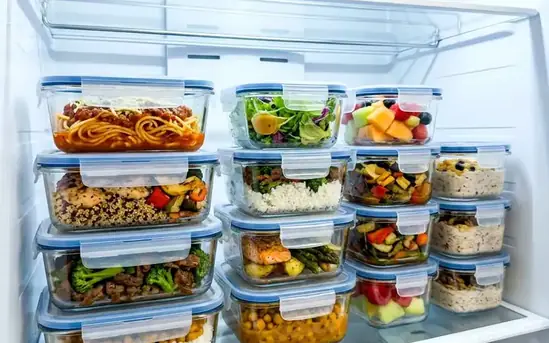
Whichever route you choose, portions beat one giant block for most households. They defrost faster, reheat more evenly, and let you take out two portions tonight and leave the rest frozen. If you are only looking a day or two ahead rather than filling the freezer, our guide to making cottage pie ahead covers the fridge-only version of the same plan.
Labelling: the unglamorous step that makes it work
Every container needs three things written on it: what it is, whether it is baked or unbaked, and the day you froze it. Baked and unbaked portions look identical once frozen, and they need different treatment later, so the label is not decoration.
Write the freezing date on your own tubs as a matter of routine. Frozen cottage pie keeps its quality for about 3 months — treat that as quality guidance, not a safety limit — and a date is the only way to use the oldest portions first. A strip of masking tape and a pen do the job; write on the tape before you stick it to a cold container, because pens skate on frost.
Reheating portions from the batch
Defrost portions in the fridge, never on the worktop, and cook or reheat them within 24 hours of defrosting. A single portion defrosts overnight; a whole dish can take a full day.
Reheat only once, until steaming hot all the way through. The reliable check is a food probe at the centre: at least 75°C. Without a probe, look for the filling bubbling at the centre and steam rising steadily. The full method, including how to keep the mash from drying out, is in our guide to reheating cottage pie.
An unbaked frozen portion is cooked rather than reheated: defrost it, then bake at 200°C conventional / 180°C fan / Gas Mark 6. A single small portion will not need the full family-pie bake, but a defrosted full dish starts cold and needs longer than the tested 25 to 30 minutes — allow roughly 40 to 50 minutes (estimate) and trust the centre check over the clock. Rest any pie for 5 to 10 minutes before serving; the filling settles and serves more neatly.
A simple weekly rhythm
A batch system works when it fits the week without effort. One pattern that suits this recipe: cook the double batch on the day you have an hour and a half to spare — the tested total time for the standard recipe — serve one dish fresh that evening, and portion the second dish for the freezer once it has cooled. Later in the week, move two portions to the fridge the night before you want them, and dinner the next day is mostly reheating.
Use the oldest labelled portions first, and do not start a new batch while the last one still sits unlabelled in the freezer. Two dishes in, portions out — that is the whole system.
Questions people ask
Yes — every ingredient doubles cleanly: 1kg beef mince, 1.8kg potatoes, 800ml hot beef stock, and so on down the list. The things that do not double are the dish (use two standard dishes, or one of about 5 to 6 litres) and the browning, which must be done in lots so the mince colours instead of steaming.
The standard recipe takes 1 hour 30 minutes in total. A double batch takes a little longer at two stages: browning the mince in lots, and simmering a fuller pan down to a thick gravy. Split across two standard dishes, the bake stays the tested 25 to 30 minutes. In one big dish, allow roughly 40 to 50 minutes (estimate) and judge by the centre check.
Too much meat in the pan at once. A kilo of mince releases more liquid than a hot pan can evaporate, so the meat boils in its own juices. Brown it in two or three loose lots, lifting each lot out before adding the next, and the mince will colour properly.
Divide it. Cooked food should be cooled and refrigerated within 1 to 2 hours, and a deep dish cools too slowly at the centre. Spoon the pie or filling into shallow trays or shallow containers, let the steam die down, then cover and refrigerate at between 0 and 5°C.
Unbaked portions give the best top, because the mash bakes only once, when the pie is cooked. Baked portions are faster later, because they only need reheating. Many batch cooks do both: one dish baked for this week, portions frozen unbaked for later.
In the fridge, eat portions within 2 days. In the freezer, quality is best within about 3 months — that is quality guidance, not a safety limit. Label each container with the contents, whether it is baked or unbaked, and the day you froze it, and use the oldest first.
Start with the cottage pie recipe exactly as tested, double it, and split it across two dishes. Cook once, eat twice — and let the freezing guide and the reheating guide handle the rest of the journey.