
Vegetarian Lentil Cottage Pie with Mashed Potato
By Michael
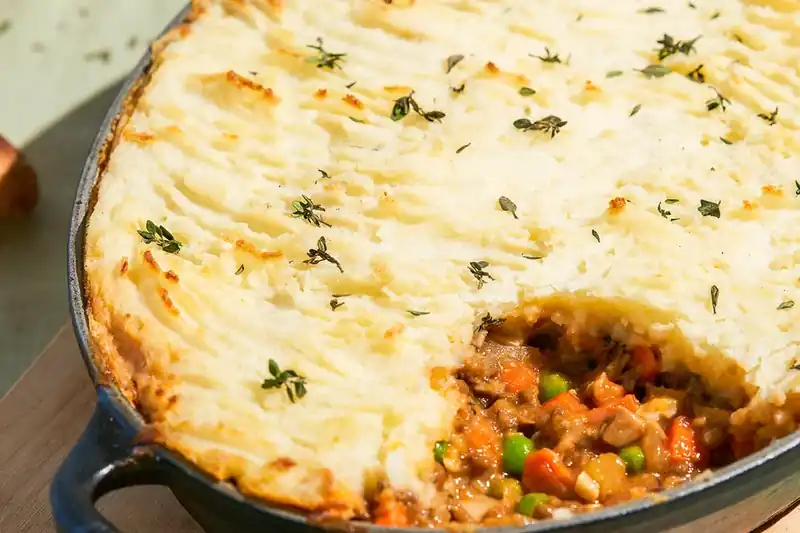
This pie keeps the structure of our kitchen-tested cottage pie — the same onion, carrot and celery base, the same flour-thickened gravy, the same thyme and bay, the same mash — and swaps the beef mince for lentils simmered in vegetable stock. It eats like cottage pie because the method is cottage pie. Only the filling changes.
What stays the same, and what changes
Most of the tested recipe carries straight over. The filling still starts with one large onion, two carrots and two celery sticks, all finely chopped, softened in a tablespoon of oil with two garlic cloves. It is still thickened with a tablespoon of plain flour and two tablespoons of tomato purée, and still flavoured with a teaspoon of dried thyme and a bay leaf. The frozen peas — 100g in the tested recipe — still go in at the end. The dish is the same too: about 2.5 to 3 litres, roughly 20 × 30 cm.
Three things change. First, the mince comes out and lentils go in, cooked in the stock rather than added ready-cooked. Second, the 400ml of beef stock becomes 400ml of vegetable stock — use a good hot stock, because with no beef in the pan the stock does more of the flavour work than it does in the original. Third, the Worcestershire sauce has to be thought about. Standard Worcestershire sauce is made with anchovies, so it is not vegetarian. Leave it out, or use a vegetarian alternative sauce of the same type. Without it the filling loses a little background savouriness, which the tomato purée and a thorough softening of the vegetables mostly make up for.
Our cottage pie variations page carries a short lentil version among its eight adaptations. This post is the fuller treatment: which lentils to buy, how long they need, and how the mash question — vegetarian or vegan — actually works out.
Choosing the lentils
Lentils are not interchangeable, and the choice decides the texture of the whole pie. Brown and green lentils keep their shape through a long simmer, so the finished filling has bite and looks like a filling. Red lentils do the opposite: they collapse into the liquid and thicken it, the way they do in a dhal. That thickening is useful in some dishes, but here it gives a soft, uniform filling with no texture under the mash. Puy-style lentils hold their shape best of all, but they are firmer than this pie needs and cost the filling its gravy-like feel.
| Lentil type | Texture after cooking | Notes |
|---|---|---|
| Brown lentils | Soft but holding their shape | The best fit for this pie. Earthy flavour, forgiving timing, and they sit in the gravy like a filling should. |
| Green lentils | Firm, holding their shape well | Very close to brown lentils; may need a few minutes longer in the pan. Use whichever of the two you have. |
| Red lentils | Break down completely and thicken | Not recommended on their own here. A small handful can thicken a loose gravy, but a full filling turns soft and porridge-like. |
| Tinned lentils | Already cooked, softer than dried | Convenient and they work, but add them near the end — they only need heating through, and long simmering makes them mushy. |
The recommendation, then: about 200g dried brown or green lentils, rinsed under cold water and picked over for any small stones. That is the adaptation quantity in place of the 500g of mince. Dried lentils roughly double in weight as they cook and they drink up stock as they go, so keep a kettle of hot water nearby. If the pan is drying out before the lentils are tender, top it up a splash at a time. Judge the end point by tasting a lentil, not by the liquid level: the lentils should be tender right through, and the gravy around them should coat a spoon rather than pool in the pan.
Making the lentil filling
Heat the oil in a wide pan on the hob and soften the onion, carrot and celery until sweet and collapsing at the edges, about 8 to 10 minutes (estimate) — the same gentle start as the tested recipe, and worth not rushing, because this base carries the filling now that there is no browned beef. Stir in the garlic for the last minute.
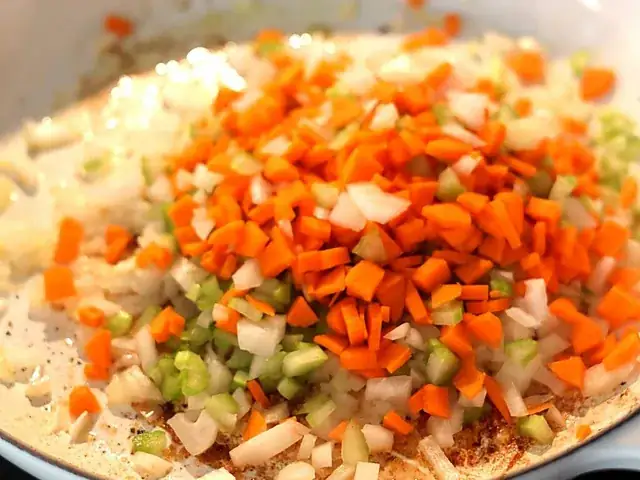
Sprinkle over the plain flour and stir it through for a minute, then add the tomato purée and stir for another minute. Pour in the hot vegetable stock gradually, stirring as you go so the flour thickens it smoothly. Add the rinsed lentils, the thyme and the bay leaf, and bring the pan to a gentle simmer.
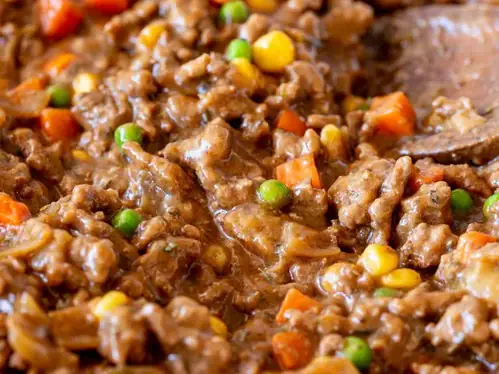
Simmer until the lentils are tender — about 25 to 30 minutes (estimate) for brown lentils, a few minutes longer for green. Keep the simmer gentle and stir now and then, because lentils settle and can catch on the base of the pan as the gravy thickens. Top up with hot water in small splashes if the pan dries before the lentils are done. When a lentil squashes easily between finger and thumb and tastes tender, stir in the frozen peas, fish out the bay leaf, and season with salt and black pepper. The filling should be thick and spoonable, looser than it will look once baked but never soupy. If it is loose, simmer it uncovered for a few more minutes rather than adding more flour at this stage.
The mash: vegetarian, not vegan
The mash is the tested recipe's mash, unchanged: 900g floury potatoes — Maris Piper or King Edward — boiled until tender, drained well, and mashed with 50g butter and about 75ml warm milk, seasoned with salt and pepper. The optional 50g of mature Cheddar from the tested recipe can still be scattered over the top; Cheddar is vegetarian in most cases, but check the label if that matters to you, as some cheeses are made with animal rennet.
Be clear about what this means for the label on the pie. Butter and milk are dairy, so the pie as written is vegetarian and not vegan. To make a vegan version, the butter and milk both have to be swapped — a plant-based spread or a little oil in place of the butter, and an unsweetened plant milk in place of the milk, warmed before it goes in. The swaps change the mash's richness and how much liquid it wants, and they deserve a proper method rather than a guess, so we have not written a second recipe here. Our guide to dairy-free cottage pie works through a dairy-free mash in full, and its approach is the one to follow for the topping if you are cooking for someone who eats no dairy at all.
Assembling and baking
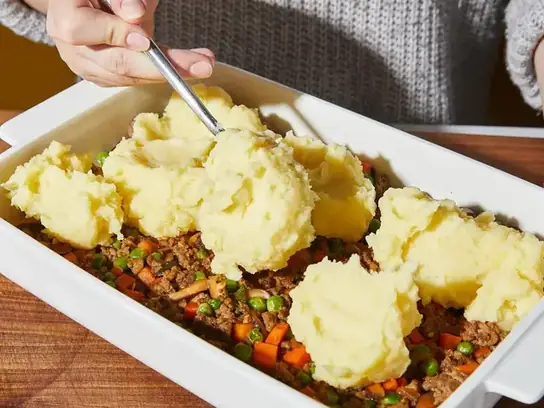
Spoon the hot lentil filling into the dish and spread it level. Add the mash in large dollops across the top, then spread it gently to the edges and seal it against the sides of the dish, so the filling cannot bubble up and over. Ridge the surface with a fork — the ridges are what crisp and colour in the oven.
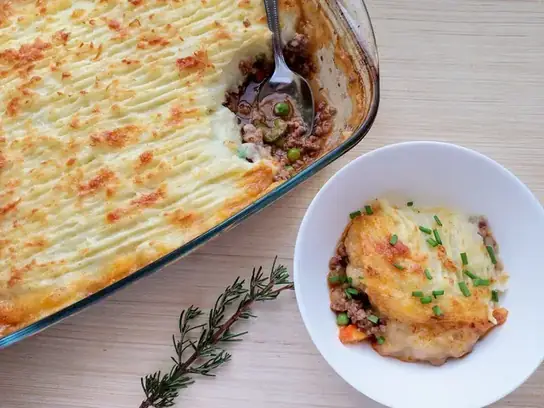
Bake at the tested recipe's settings: 200°C conventional / 180°C fan / Gas Mark 6, for 25 to 30 minutes, until the top is golden and the filling is bubbling up at the edges. The filling was simmered until tender before it went in, so the bake is about heating the whole pie through and finishing the top. Check the centre is steaming hot — a food probe should read at least 75°C at the centre — then rest the pie for 5 to 10 minutes before serving. The rest lets the gravy settle, and slices or spoonfuls hold together instead of slumping.
Storing and reheating leftovers
Lentil cottage pie keeps and reheats by the same rules as the beef version. Cool leftovers and refrigerate them within 1 to 2 hours, in a fridge kept between 0 and 5°C, and eat them within 2 days. To reheat, heat the pie only once, until it is steaming hot all the way through, with the centre at least 75°C on a probe if you use one. It also freezes well, baked or unbaked: defrost it in the fridge and cook or reheat it within 24 hours of defrosting. The lentils, if anything, improve overnight — they take up more of the gravy's flavour in the fridge — but the 2 day limit stands regardless of how good it still tastes.
Questions people ask
No. Unlike dried beans, brown and green lentils cook from dry without soaking. Rinse them under cold water, pick out any small stones or shrivelled lentils, and add them straight to the stock. They simmer to tenderness in about 25 to 30 minutes (estimate) in the filling.
Yes. Drain and rinse them, and add them once the gravy has been made and simmered a little on its own — tinned lentils are already cooked, so they only need to heat through and take up flavour. Use a little less stock, because tinned lentils bring no thirst with them, and expect a slightly softer filling than dried lentils give.
Not as written. The filling is free of animal products once the Worcestershire sauce is left out or swapped, but the mash contains butter and milk. For a vegan pie, both need replacing with plant-based alternatives, and our dairy-free cottage pie guide covers that topping properly.
You can, but the pie changes character. Red lentils break down completely and thicken the gravy, so the filling becomes soft and uniform rather than distinct and bitey. If red lentils are all you have, use them and simmer for a shorter time, and consider stirring a drained tin of green lentils through at the end to give the filling some texture back.
Usually because the lentils were still holding liquid they had not yet absorbed, or the filling was assembled before it had thickened. Simmer the filling uncovered until the gravy coats a spoon and a spoon drawn across the pan leaves a brief trail. Remember too that the filling firms up as it stands, so a few minutes off the heat before the mash goes on helps.
Yes — it freezes as well as the beef version, baked or unbaked. Cool it and get it into the fridge within 1 to 2 hours, wrap it well, and freeze. Defrost it in the fridge and cook or reheat it within 24 hours of defrosting, heating it only once, until steaming hot all the way through.
If you are cooking for a mixed table, the tested cottage pie recipe and this lentil version share the same mash, the same dish size and the same oven settings, so the two can bake side by side. The other adaptations — cheddar-topped, sweet potato, gluten-free and more — are gathered on the cottage pie variations page.