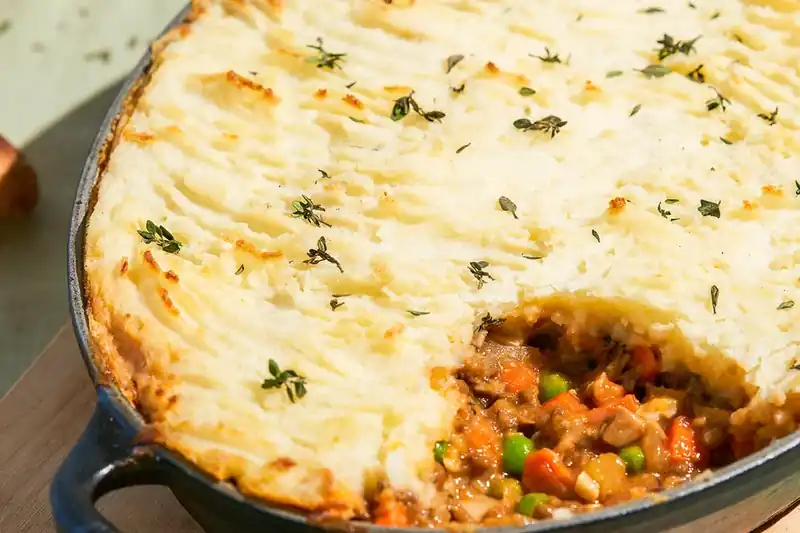
Eight adaptations of the main cottage pie recipe. Each one starts from that recipe — the quantities and method there are the base, and only the changes are described here.
Testing status: these are adaptation suggestions based on standard cooking practice. They have not been fully developed and tested as separate recipes, so treat a first attempt as a test and expect small adjustments to liquid and seasoning.
Cheese-topped cottage pie
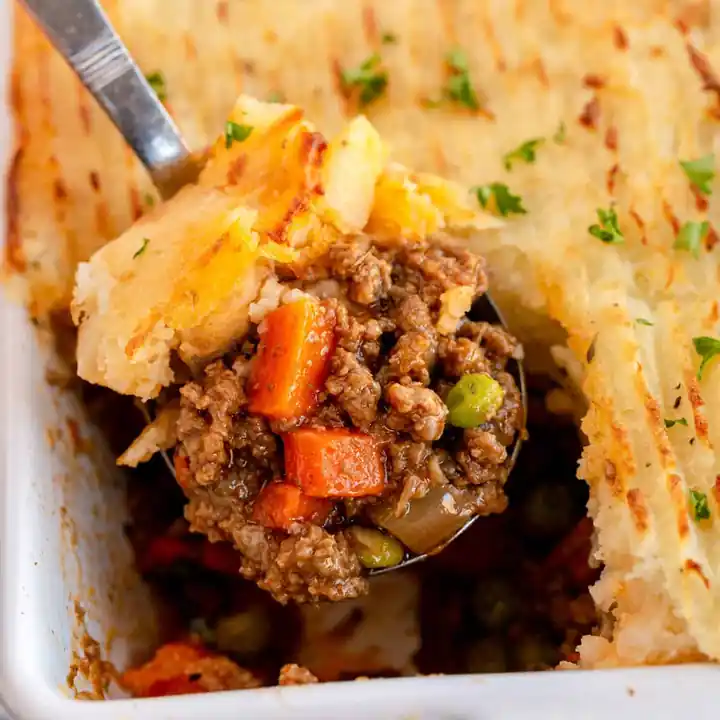
What changes: 50g grated mature Cheddar scattered over the forked mash before baking. Nothing else changes. Why it matters: the cheese adds salt and richness and browns faster than potato alone, so check the pie a few minutes earlier than the recipe time if your oven runs hot, and season the mash itself a fraction more lightly.
Texture and flavour: a crisper, more deeply coloured top with a savoury, slightly sharp flavour. Identity: still a cottage pie, but not traditional in a stricter sense — many traditional versions have no cheese at all. Testing needed: yes, as an untested suggestion; the main variables are browning time and salt balance.
Extra-vegetable cottage pie
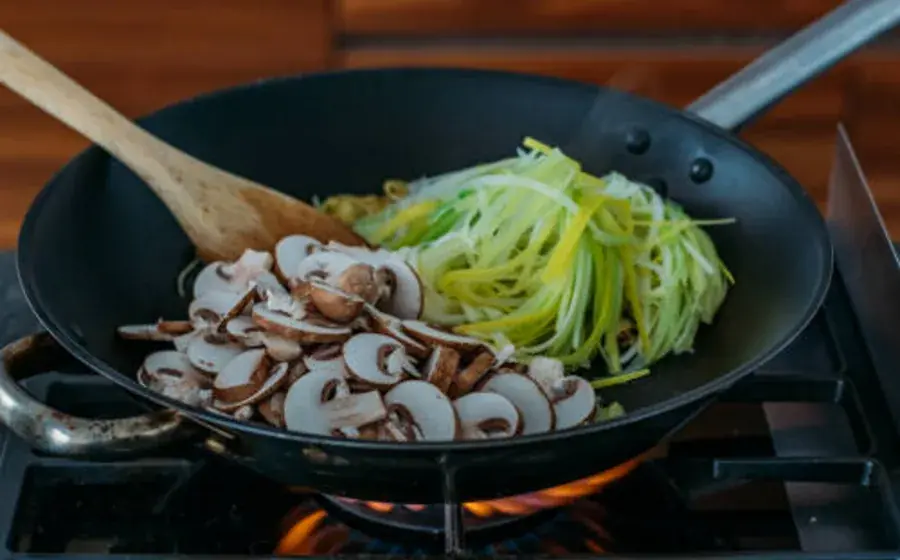
What changes: add finely diced mushrooms, leeks, swede or parsnip to the filling. Why it matters: every additional vegetable changes the liquid in the dish, which is the thing cottage pie is most sensitive to.
Ingredient and method adjustments: add hard vegetables such as swede and parsnip with the carrot and celery; add leeks with the onion; add mushrooms after the mince has browned and give them a few minutes to release their water before the stock goes in. Mushrooms and courgette release water, so allow a longer simmer rather than extra stock. Root vegetables absorb a little liquid, so the filling may need a splash more stock.
Texture and flavour: a looser-textured, more varied filling with more sweetness from root vegetables. Identity: still a cottage pie. Testing needed: yes — final liquid after simmering is the point to check.
Individual portions
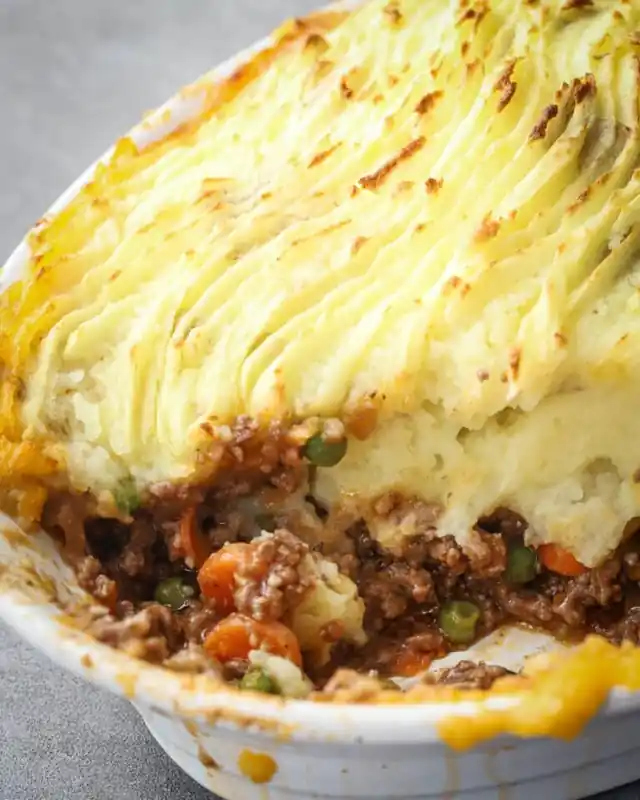
What changes: the filling is divided between ramekins or small ovenproof dishes and each is topped and forked separately. Why it matters: small pies heat through faster, freeze and defrost in portions, and suit households eating at different times. Everyone also gets crisp edges.
Method adjustments: allow roughly 15 to 20 minutes of baking for small pies assembled with hot components (estimate), and check the centre of one portion before serving the rest. Keep the same filling thickness check before topping — a thin filling behaves the same at any size. Testing needed: yes, particularly the baking time for your ramekin size.
Gluten-free adaptation
What changes: the plain flour is replaced with cornflour, and two other ingredients must be checked rather than assumed safe. Why it matters: gluten in this dish is not only in the flour.
Ingredient adjustments: do not add cornflour at the flour stage. Instead, mix 1 tablespoon of cornflour with 2 tablespoons of cold water and stir it into the simmering filling near the end, then simmer for 2 minutes. Then check the label of your stock and the label of your Worcestershire sauce: some brands are gluten-free and some are not, and formulations change. Do not assume any stock, gravy product or sauce is gluten-free without reading its label.
Texture and flavour: cornflour gives a glossier, slightly clearer sauce than flour; the flavour is otherwise unchanged and the cooking time stays the same. Testing needed: yes — check the sauce thickness at the quantity above.
Dairy-free topping
What changes: the butter and milk in the mash only; the filling is unchanged. Why it matters: the topping's liquid behaviour changes, and a sweetened alternative will flavour a savoury pie in a way that does not suit it.
Ingredient adjustments: swap the butter for a dairy-free spread or a tablespoon of olive oil, and the milk for an unsweetened plant milk, or for a few spoonfuls of the potato cooking water. Add the liquid even more gradually than usual, because some alternatives make the mash slacken suddenly.
Texture and flavour: slightly less rich, and softer if the liquid goes in too fast. Drying the potatoes thoroughly (Step 7 of the recipe) matters even more here. Testing needed: yes, for liquid quantity.
Lentil / vegetarian adaptation
What changes: cooked green or Puy lentils replace some or all of the mince. For a half-and-half filling, use 250g beef mince and about 200g cooked lentils, added near the end of simmering. For a fully meat-free version, leave the mince out, use around 400g cooked lentils and vegetable stock, and leave out the Worcestershire sauce or use a vegetarian alternative — the standard sauce traditionally contains fish (anchovy), so a version using it is not vegetarian.
Why it matters: lentil choice decides the texture. Green and Puy lentils hold their shape. Red lentils break down completely and turn the filling into a purée, so they are not suitable here. Lentils also absorb liquid, so add a splash more stock if the filling looks dry.
Texture and flavour: a softer, earthier filling without the browned-meat depth, which makes thorough seasoning and the tomato purée stage more important. Identity: this changes the traditional identity of the dish. Call it a lentil cottage pie, so readers know what they are making. Testing needed: yes, as a separate formulation.
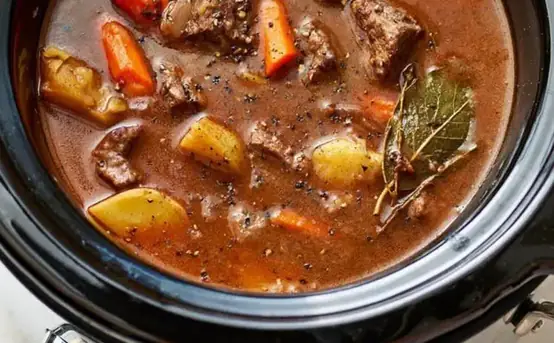
Slow cooker cottage pie
What changes: the filling is cooked in a slow cooker instead of simmered on the hob; the pie is still topped with mash and finished in the oven. Why it matters: a slow cooker traps moisture, so the filling reduces far less than it does in an open pan — the liquid quantity is the whole adaptation.
Ingredient and method adjustments: brown the mince and soften the vegetables on the hob first, exactly as in Steps 1 to 3 of the main recipe — a slow cooker does not brown, and skipping this stage gives a pale, steamed-tasting filling. Transfer to the slow cooker with the stock reduced to about 250ml, then cook on low until the beef is tender. Check the consistency before assembly: if it is thinner than the spoon-trail test in the recipe, simmer it briefly in a pan or stir in the cornflour mixture from the gluten-free adaptation. Make the mash as usual, assemble, and bake as usual so the top browns — a slow cooker cannot do that part.
Texture and flavour: a softer, more melded filling; the vegetables partly melt into the gravy. Identity: still a cottage pie once it is topped and baked. Testing needed: yes — cooker models vary widely, so no single slow-cooker time is stated here; treat the first attempt as a test and judge by tenderness and thickness, not the clock.
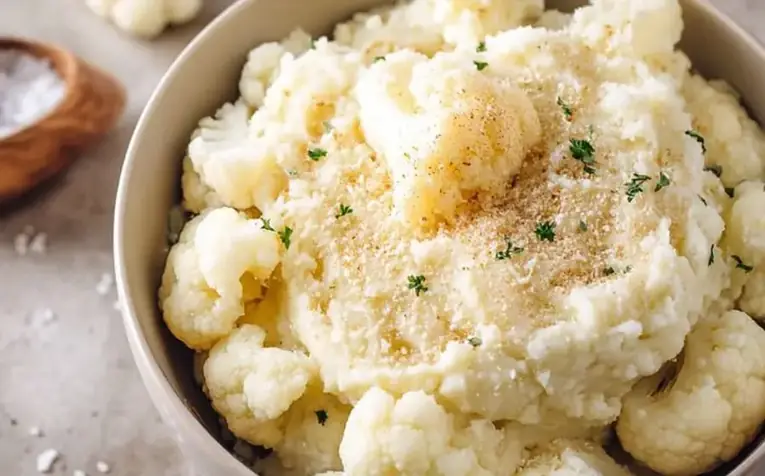
Cauliflower mash topping
What changes: part or all of the potato in the topping is replaced with cauliflower. Why it matters: cauliflower holds much more water than potato and has far less starch, so the topping behaves differently — wetter, softer, and less able to hold forked ridges.
Ingredient and method adjustments: for a half-and-half topping, use about 450g potato and 450g cauliflower florets. Cook the cauliflower until completely tender, then drain it very thoroughly and let it steam dry for several minutes — longer than you would dry potatoes. Mash it with the potato, butter and only a splash of milk at first; many batches need no extra milk at all. A full cauliflower topping is possible but slumps and browns unevenly, so half-and-half is the safer starting point.
Texture and flavour: lighter and softer, with a mild cauliflower flavour that is noticeable but not dominant in the half-and-half version. Dietary note: this swap is sometimes made by readers reducing carbohydrate, but no nutrition figures are stated for it here, because none have been calculated for this formulation. Testing needed: yes, particularly the liquid quantity.
Questions about the variations
The cheese-topped version. One ingredient is scattered over the mash before baking, and nothing else in the recipe changes. It is the place to start if you want to change one thing at a time.
Often, yes — cheese on top of an extra-vegetable filling, for example, or a dairy-free topping on individual portions. Bear in mind that each change can affect the liquid in the filling and the salt in the dish, and that these adaptations are untested suggestions. Treat a first combined attempt as a test, and change one thing back if the result is not right.
No. Every variation on this page uses the main recipe's oven temperature unless its own section says otherwise. What can change is the time: small individual portions bake faster, and a cheese topping browns sooner, so check those pies a few minutes early.
Work through every ingredient, not just the obvious one. Each dietary adaptation on this page flags the ingredients that need checking — in this recipe, usually the stock and the Worcestershire sauce — because brands differ and formulations change. Always read the label of the product you actually have.
Alarms work only while this page is open. State is kept on this device only.
Your privacy on this site
This site uses local storage on your device for the cooking timer and to remember your preferences. No analytics or advertising cookies are active. You can change your mind at any time in Cookie Settings.