Cottage Pie with Sweet Potato Topping
By Michael
The beef filling stays exactly as tested. Only the topping changes: sweet potatoes instead of floury potatoes. The swap sounds simple, and it is, but sweet potato behaves differently in the pan and in the mash, so the technique matters more than the ingredient list.
What actually changes, and what does not
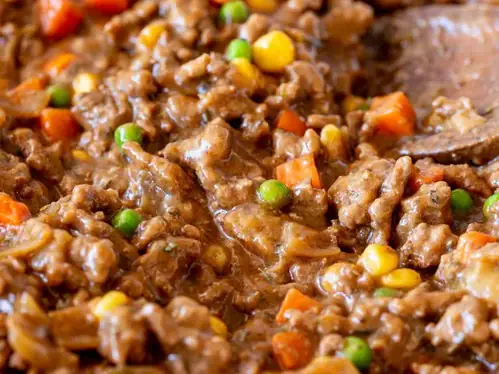
Everything below the topping is the tested recipe, word for word. The filling is still 500g beef mince browned in 1 tablespoon of oil, with 1 large onion, 2 carrots at about 200g, 2 celery sticks and 2 garlic cloves softened in the pan. It is still thickened with 1 tablespoon of plain flour, flavoured with 2 tablespoons of tomato purée, 1 tablespoon of Worcestershire sauce, 1 teaspoon of dried thyme and a bay leaf, and simmered in 400ml of hot beef stock, with 100g of frozen peas stirred through at the end. Making the filling is covered step by step in the cottage pie recipe, and it needs no adjustment for this topping.
The variations page gives this swap a short section of its own. This article goes deeper: why sweet potato mash so often turns out loose, the technique that prevents it, and what the finished pie tastes and looks like compared with the original. The short version is that sweet potato is a wetter, softer, sweeter vegetable than a floury potato, and the mash has to be handled with that in mind from the moment it goes into the pan.
Why sweet potato mash can turn out loose
A floury potato, such as Maris Piper or King Edward, is mostly dry starch. Boiled and mashed, it drinks up butter and milk and still holds its shape. A sweet potato is built differently. It holds more water inside its flesh, and its flesh is softer and less starchy, so when it is mashed it gives up that water instead of absorbing liquid.
That one difference explains most disappointing sweet potato toppings. If you boil sweet potato until it is very soft, drain it briefly and then mash it with the same 75ml of warm milk the tested recipe uses, the result is closer to a purée than a mash. It spreads too thinly, it slumps rather than sits, and in the oven it can slide down into the filling instead of crisping on top.
The good news is that every part of the fix is technique, not ingredients. Cut the chunks evenly so they finish cooking at the same moment. Stop boiling as soon as they are tender rather than letting them sit and soak. Drain them properly and let the steam escape. Then mash with a light hand on the milk. Do those four things and the topping behaves.
Making the sweet potato topping, step by step
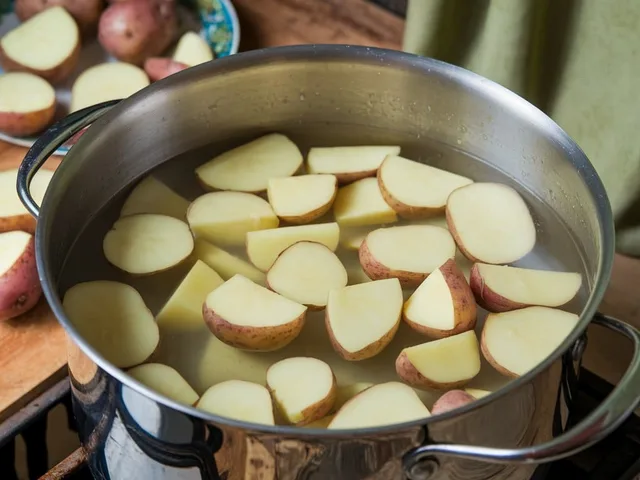
- Peel and cut evenly. Use about 900g of sweet potatoes (estimate — the same weight as the tested potato topping, so the pie keeps its proportions). Peel them and cut into chunks of a similar size, roughly 3 to 4cm. Even chunks matter: small pieces fall apart while large ones are still firm.
- Boil until just tender. Cover with cold water, add salt, bring to the boil and simmer until a knife slides in with no resistance. This usually takes a little less time than floury potatoes — around 12 to 15 minutes once simmering (estimate). Check early rather than late: an over-boiled sweet potato has absorbed water you cannot get back.
- Drain, then steam-dry thoroughly. Drain the pan at once, then return the chunks to the hot pan, off the heat, for 2 to 3 minutes. Shake the pan gently once or twice. You should see steam rising and the surfaces of the chunks turning matte and dry-looking. This step is the single biggest difference between a firm topping and a loose one.
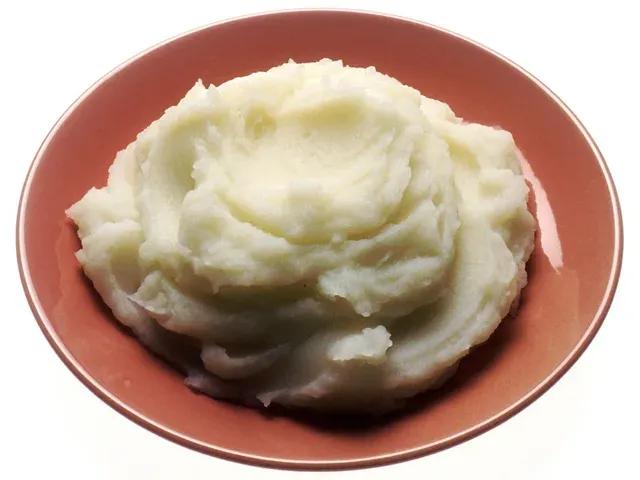
- Mash with butter first. Add the same 50g of butter the tested recipe uses, plus salt and pepper, and mash until smooth. Sweet potato mashes more easily than potato and needs less working — stop as soon as it is smooth, because the more it is beaten, the looser and stickier it becomes.
- Judge the milk, do not just add it. The tested recipe adds about 75ml of warm milk. With sweet potato, add none at first. Only if the mash is too stiff to spread, add warm milk a tablespoon at a time until it just holds soft peaks. Many batches will need little or no milk at all, and that is correct, not a mistake.
Potato topping vs sweet potato topping
| Point | Potato (tested) | Sweet potato (adaptation) |
|---|---|---|
| Quantity for the topping | 900g floury potatoes, such as Maris Piper or King Edward | About 900g sweet potatoes (estimate), matched to the tested weight |
| Water content | Dry and starchy; absorbs butter and milk | Holds more water; releases liquid as it mashes |
| Boiling | Until tender, as in the tested recipe | Cooks a little faster (estimate); check early and stop as soon as it is tender |
| Drying after draining | A brief steam-dry in the hot pan | Essential: a thorough steam-dry of 2 to 3 minutes |
| Milk | About 75ml warm milk, as tested | Little or none; add a spoonful at a time only if the mash is too stiff |
| Texture of the mash | Fluffy, holds ridges and peaks | Softer and smoother; holds gentle ridges rather than stiff peaks |
| Flavour and colour | Mild and savoury, pale gold when baked | Noticeably sweeter, deep orange, colours darker at the edges |
| Risk in the oven | Sinks only if the filling is wet or hot | Sinks more readily if the mash is wet; sealing the edges matters |
Assembly and baking
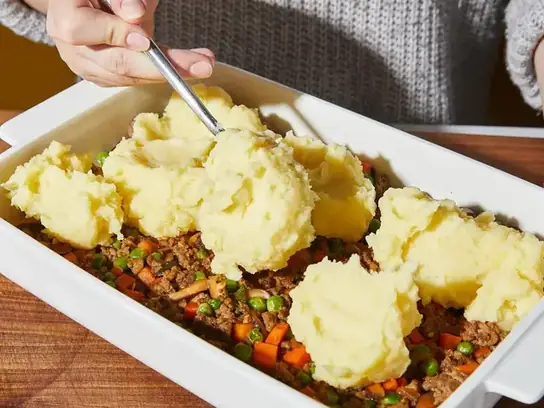
Assembly is identical to the tested pie. Spoon the hot filling into a dish of about 2.5 to 3 litres, roughly 20 × 30cm, and level it. Add the mash in large dollops across the surface, then spread it to the edges and seal it against the sides of the dish. Run a fork over the top to raise ridges. The seal matters more with this topping than with potato: sweet potato mash is softer, and any gap at the edge is an invitation for it to slip.
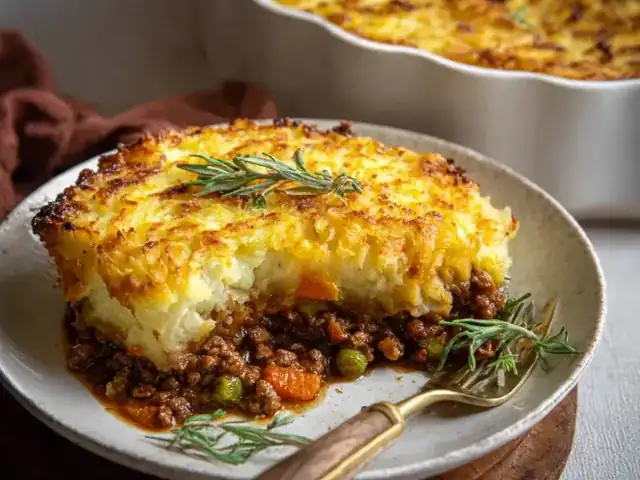
Bake at the tested settings — 200°C conventional / 180°C fan / Gas Mark 6 — for about 25 to 30 minutes (estimate, carried over from the tested bake). Judge it by the same cues as the original: the topping coloured at the ridges and edges, the filling bubbling up at the sides, and steam when you press a knife into the centre. Rest the pie for 5 to 10 minutes before serving, exactly as tested. The rest is not optional with this topping: the softer mash firms up as it stands, and the slices hold together far better for it.
One honest difference to expect: sweet potato colours more deeply and more quickly at the edges than potato does, because of its natural sugars. Deep golden-brown edges are normal and taste good. If the ridges are darkening faster than you like while the filling is not yet bubbling, lay a sheet of foil loosely over the top for the last few minutes.
The sinking risk is higher with this topping
Mash sinks into a cottage pie for three reasons: the filling is too wet, the filling is too hot, or the topping is not sealed to the edges. A sweet potato topping adds a fourth pressure, because the mash itself may carry more water than a potato mash would. Our guide to why the mash sinks into cottage pie works through all three main causes and the fix for each, and every fix applies here.
Two of them deserve repeating for this version. First, reduce the filling properly: it should be thick enough that a spoon drawn across the pan leaves a trail that fills in slowly. The tested method already simmers the filling down, and with a wetter topping there is no spare room for a loose gravy. Second, if your filling has finished well before the topping is ready, let it stand for a few minutes so it is steaming rather than furiously bubbling when the mash goes on. Hot, wet filling under a soft mash is how toppings disappear.
What it tastes like, honestly
The contrast is the point of the dish. The filling is savoury, rich and deeply beefy, and against it the topping is soft and distinctly sweet. Some people love that sweet-savoury balance and prefer this version to the original. Others find the sweetness one note too many against a rich gravy, and go back to potato. Neither reaction is wrong; it is a genuine difference, not a subtle one, and it is better to know that before you commit 900g of sweet potatoes to it.
The texture differs too. Sweet potato mash never quite crisps the way floury potato does. The ridges colour and firm at the edges, but the top stays softer overall, closer to a baked purée than a crust. If crispness is what you love most about cottage pie, the tested potato topping — and the advice in our guide to the best potatoes for cottage pie mash — will suit you better. If you like the softer, sweeter result, this version earns its place.
Leftovers and storage
Leftovers keep and reheat exactly as the tested pie does. Cool and refrigerate within 1 to 2 hours, keep the fridge between 0 and 5°C, and eat leftovers within 2 days. Reheat only once, until steaming hot all the way through, with a probe reading of at least 75°C at the centre if you use one. The softer topping may slump a little more on reheating than potato does, but the flavour is unaffected, and a few minutes uncovered under a hot grill at the end will firm the surface again.
Questions people ask
No. The tested beef filling stays exactly as it is — same mince, same vegetables, same gravy. The only change is the topping. If anything, reduce the filling until it is properly thick, because a wetter topping leaves no room for a loose gravy underneath it.
About the same weight — around 900g (estimate). Sweet potato loses a little more in peeling and trimming than a floury potato, so if your peeled weight comes in slightly under, the topping will simply be a touch thinner rather than wrong. This swap has not been separately kitchen-tested, so treat the weight as a well-matched starting point.
Almost always water. Sweet potatoes hold more water than floury potatoes, and over-boiling adds more. Drain the chunks the moment they are tender, steam-dry them in the hot pan for 2 to 3 minutes, mash with butter first, and add milk only a spoonful at a time if the mash is too stiff. If it is already loose, a few minutes back on a very low heat, stirred constantly, will drive some water off.
You can, if you scrub them well, but the mash will be flecked and less smooth, and the skins can separate into chewy pieces as it bakes. For a topping that spreads and seals at the edges, peeled sweet potato gives the better texture. Save skin-on for wedges and jackets.
Not quite. The ridges colour deeply and the edges firm, but the top stays softer than a floury potato crust because the flesh is less starchy and holds more moisture. Fork ridges give it more surface to colour, and a loose sheet of foil protects it if the edges darken before the filling bubbles.
Yes — half floury potato and half sweet potato, boiled and mashed together, gives a gentler sweetness and a firmer texture than sweet potato alone. It is also an untested adaptation, so keep the same habits: steam-dry thoroughly and add milk cautiously, because the sweet potato half still brings extra water.
Start from the tested cottage pie recipe for the filling, and read the shorter version of this swap on the variations page. If your topping ever sinks, the mash-sinking guide will tell you why, and the potato guide covers the original topping in the same depth.