Dairy-Free Cottage Pie with a Smooth Potato Topping
By Michael
Making cottage pie dairy-free comes down to one part of the dish: the mash. The beef filling in our tested recipe contains no dairy at all, so the whole job is replacing 50g of butter and about 75ml of milk in the topping — and doing it without losing the light, fluffy texture the mash is there for.
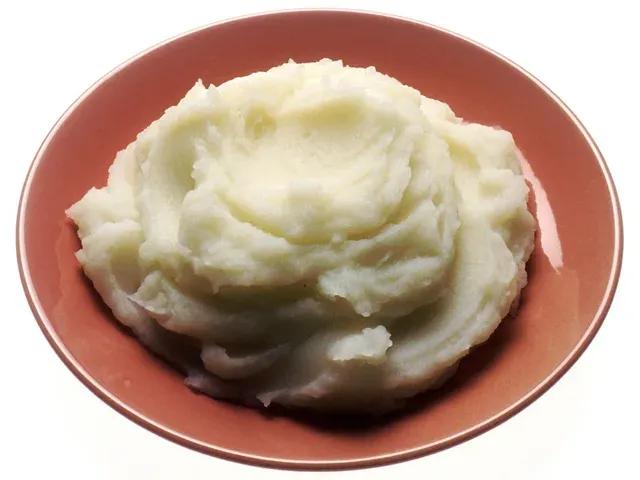
What the butter and milk do in the tested mash
It helps to know what you are replacing before you replace it. Butter and milk do different jobs in the mash of the tested recipe, and a good swap has to cover both.
The 50g of butter is the fat. It gives the mash richness and a round, savoury flavour, and it coats the potato so the texture feels smooth rather than pasty. Fat also helps the top of the pie: the ridges of mash catch the heat in the oven and turn golden partly because of what is in them.
The roughly 75ml of warm milk is the liquid. Potato on its own mashes dry and heavy; the milk loosens it to a consistency that spreads over the filling in dollops and seals to the edges of the dish. The recipe specifies warm milk for a reason — cold liquid cools the potato, and cool mash is stiffer and harder to spread.
So the swap has two parts: a fat to replace the butter, and a warm liquid to replace the milk. Neither needs to imitate dairy exactly. It needs to do the same work. The rest of this page is about choosing both, and about the technique that matters more than either — because the difference between fluffy mash and gluey mash is mostly in the handling, not the ingredients.
The filling is already dairy-free
Before touching anything, it is worth checking the filling of the tested recipe ingredient by ingredient. Beef mince, onion, carrots, celery, garlic, plain flour, tomato purée, Worcestershire sauce, beef stock, dried thyme, a bay leaf and frozen peas: none of them is a dairy product. The gravy is thickened with flour and stock, not cream. Cooked exactly as written, the filling needs no adaptation at all.
The one exception in the whole recipe is an optional extra. The 50g of mature Cheddar that the recipe suggests scattering over the top is dairy, so on a dairy-free pie it simply stays in the fridge. The other two optionals — a pinch of grated nutmeg and a teaspoon of English mustard, both stirred into the mash — are not dairy products, though with any processed ingredient it is sensible to glance at the label of the one you have.
One smaller point: some cooks butter the oven dish before the filling goes in. The tested recipe does not call for it, but if buttering the dish is your habit, use a smear of oil instead and nothing changes.
Dairy swaps for the mash
These are the swaps this guide is built on. Quantities match the tested recipe, so the mash stays in proportion with the filling.
| Tested ingredient | Swap | What changes |
|---|---|---|
| 50g butter (in the mash) | A dairy-free baking or spread block, same weight | The closest match in behaviour: it melts into the mash and gives a similar richness. Choose a block rather than a soft tub spread where you can — blocks tend to have a firmer, more butter-like fat content |
| 50g butter (alternative) | About 2 to 3 tablespoons of olive oil | A lighter result with a faint olive note. Add it gradually and stop when the mash feels rich enough; oil pours faster than butter melts, so it is easy to overdo |
| About 75ml warm milk | Unsweetened oat milk, warmed, the same amount | The nearest in texture of the common plant milks, with a mild flavour the potato carries easily. Unsweetened matters — a sweetened version tastes noticeably sweet against a savoury filling. Warm it first, as the recipe warms the milk |
| About 75ml warm milk (alternative) | Reserved hot potato cooking water, added a splash at a time | The lightest option, and the one with nothing extra to buy. The starchy water loosens the mash without adding flavour. The result is a little less creamy, so seasoning matters more |
| 50g mature Cheddar (optional, on top) | Leave it off | The topping stays plain, and still crisps: fork ridges brown because of the hot oven and the fat worked through the mash, not because of cheese |
A note on the liquid quantity. Plant milks and potato water are absorbed slightly differently from cow's milk, so treat the 75ml as a guide rather than a rule: add about two-thirds of it, mash, then add the rest only if the mash is still stiff. You can always add more liquid. You cannot take it out.
Mash technique: keeping it light without dairy
Without butter and milk to fall back on, technique carries more of the load. None of the steps below is new — they are the same habits that make any mash good — but each one matters more in this version of the pie.
Start with floury potatoes. The tested recipe uses 900g of a floury variety, Maris Piper or King Edward, because floury flesh breaks down into a dry, fluffy mash. Waxy potatoes hold their structure and turn dense and waxy in the masher whatever liquid you use. Our guide to the best potatoes for cottage pie mash compares the varieties in full.
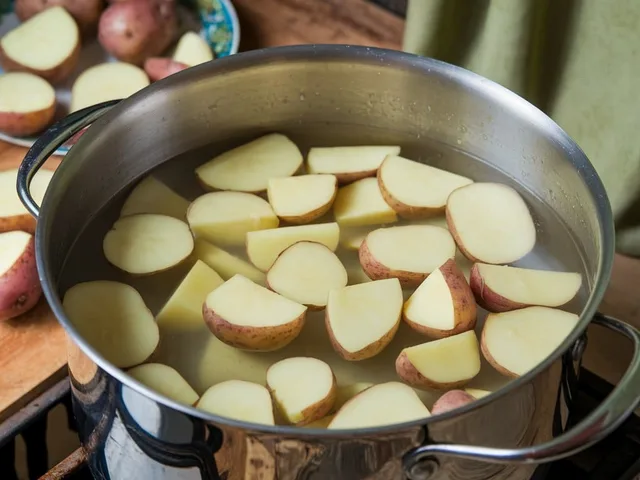
Cook them evenly. Cut the potatoes into even chunks so they finish at the same time, and boil until a knife slides in without resistance. Undercooked lumps do not mash out; they stay as lumps.
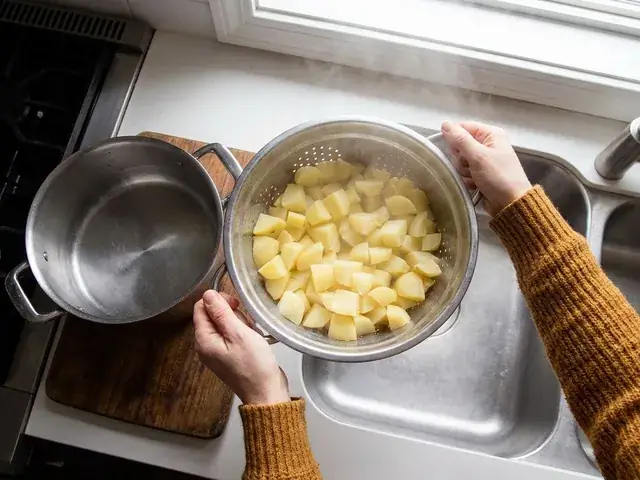
Drain them properly, then dry them. This is the step that decides the texture. Tip the potatoes into a colander and let them steam for a couple of minutes (estimate). Better still, return them to the hot, dry pan over a low heat for a short spell, shaking the pan, until the surfaces look dry and floury. Water left in the potato is what makes mash sloppy and gluey — and with no butter to coat it, wet potato shows up faster.
Warm the liquid. Whichever liquid you chose, add it warm, not fridge-cold, exactly as the tested recipe warms the milk. Cold liquid on hot potato tightens the mash and makes it harder to work.
Mash; do not whip. Use a potato masher and work steadily until the lumps are gone, then stop. A food processor, blender or vigorous whisking ruptures the potato's starch and turns the mash elastic and gluey. Dairy can mask a little overworking; without it, there is nothing to hide behind, so the moment the mash is smooth, put the masher down.
Season like you mean it. Butter brings salt and savoury depth with it. Without it, the mash depends on you: salt the cooking water, then taste the finished mash and add salt and black pepper properly. The optional pinch of nutmeg or teaspoon of English mustard from the tested recipe both earn their place here, adding back some of the background warmth butter usually supplies.
Assembling and baking: nothing else changes
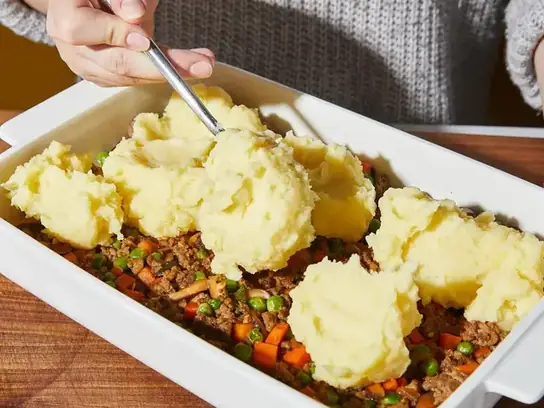
From this point the pie is the tested recipe again. Spoon the filling into a dish of about 2.5 to 3 litres, roughly 20 × 30 cm. Dollop the mash over the top in spoonfuls, spread it right to the edges so the filling is sealed in, and ridge the surface with a fork. Sealing the edges matters: it stops the gravy bubbling up over the mash and keeps the layers distinct.
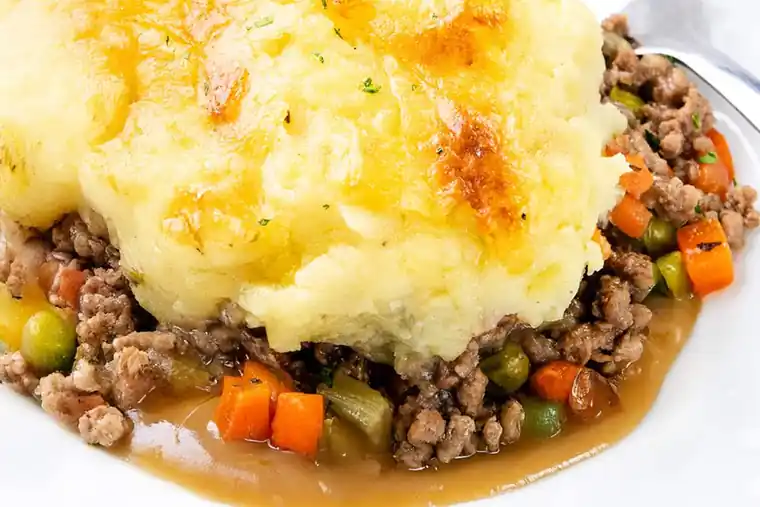
Bake at 200°C conventional / 180°C fan / Gas Mark 6 for 25 to 30 minutes, until the top is golden and the filling bubbles at the edges. If the top is slow to colour — a dairy-free mash can brown a touch more gently — brush the ridges lightly with a little oil before baking, or give the pie a short spell under a hot grill at the end, watching it closely. Then rest the pie for 5 to 10 minutes before serving, as the tested recipe does, so the gravy settles and the portions hold together.
Hidden dairy worth a label check
The swaps above cover the dairy you can see. A short list of places it can appear uninvited is worth a moment, kept general on purpose — formulations vary, so the label on your product is the authority, not this page.
Stock is the main one. Most beef stock products are dairy-free, but some prepared stocks and stock products include milk-derived ingredients, so read the allergen information on the cube, pot or powder you use. Spreads are the other trap: a product described as suitable for baking is not automatically dairy-free, and some margarines contain milk. If the pie must be strictly dairy-free — for an allergy rather than a preference — choose a block that states it clearly on the packaging, and treat ambiguous labels as a no.
Questions people ask
Yes, exactly as written. The filling of the tested recipe — beef mince, vegetables, plain flour, tomato purée, Worcestershire sauce, beef stock, herbs and peas — contains no dairy. The only dairy in the whole dish is the butter and milk in the mash, and the optional Cheddar on top, which you simply leave off.
A dairy-free baking block, used at the same weight as the butter (50g), is the closest substitute in richness and behaviour. Olive oil also works — about 2 to 3 tablespoons, added gradually — and gives a lighter mash with a faint olive flavour. Whichever you use, the bigger wins are drying the potatoes well after draining and adding warm liquid.
Unsweetened oat milk is the safest choice: it is mild, fairly neutral and close in body to cow's milk, so the mash tastes of potato rather than of the substitute. Warm it before adding, and add about two-thirds first, then more only if needed. Reserved hot potato cooking water is the alternative — lighter and less creamy, but free and always to hand.
Gluey mash is a technique problem, not a dairy problem. The usual causes are potatoes that went into the masher still wet, or overworking — especially with a food processor, blender or whisk, which bursts the starch and makes the mash elastic. Drain thoroughly, let the potatoes steam dry, mash by hand, and stop as soon as the lumps are gone.
Yes. The crispness comes from the fork ridges catching the oven's heat and from the fat worked through the mash — which the dairy-free block or oil still provides. Ridge the surface well with a fork, and if the colour is slow, brush the ridges lightly with oil before baking or finish the pie briefly under a hot grill, watched closely.
The same way as the standard pie, following Food Standards Agency guidance. Cool and refrigerate leftovers within 1 to 2 hours, keep the fridge between 0 and 5°C, and eat them within 2 days. Reheat only once, until steaming hot all the way through — a probe at the centre should read at least 75°C. The swaps make no difference to any of these figures.
For the short version of this adaptation, see the dairy-free section of our cottage pie variations. To cook the pie, start from the kitchen-tested cottage pie recipe and change only the mash, following the swaps and technique above — and if the potato choice is still open, the guide to the best potatoes for cottage pie mash will settle it.