
Budget Cottage Pie: Stretching Beef Without Losing Flavour
By Michael
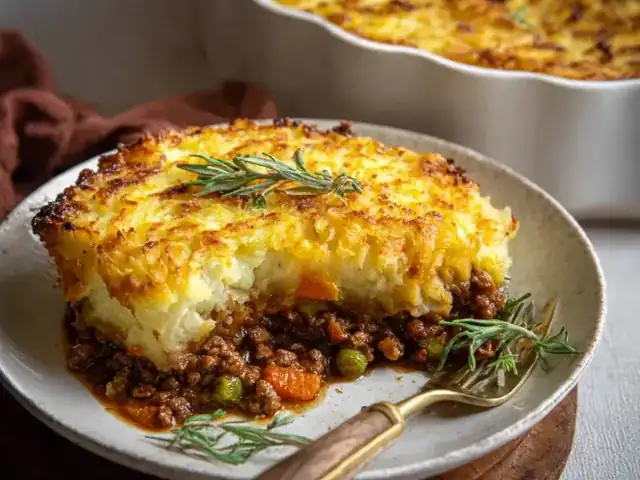
Our tested cottage pie makes four generous servings from 500g of beef mince. This post is about technique that makes beef go further: browning a smaller amount properly so it tastes of more, then stretching the filling with vegetables, lentils and peas that support the beef instead of diluting it. Nothing here needs a special shop or a special ingredient.
Start with the browning
Flavour in a cottage pie filling comes mostly from one step: the browning. Mince that has coloured properly — deep brown in patches, with the pan juices reduced away — tastes beefier, spoon for spoon, than a larger amount of mince that has merely turned grey. If you are using less beef, this is the step that pays you back.
Get the pan properly hot before the mince goes in, with the tablespoon of oil from the recipe. Add the mince and leave it alone for the first minute or two rather than stirring constantly, so the meat in contact with the pan can colour. Then break it up with a wooden spoon into small pieces and keep cooking until the liquid it releases has bubbled away and the mince is frying in its own fat rather than steaming. Crowding the pan works against you: a thick layer of mince steams in its own juices and never colours. If your pan is small, brown the mince in two batches and combine them before the vegetables go in.
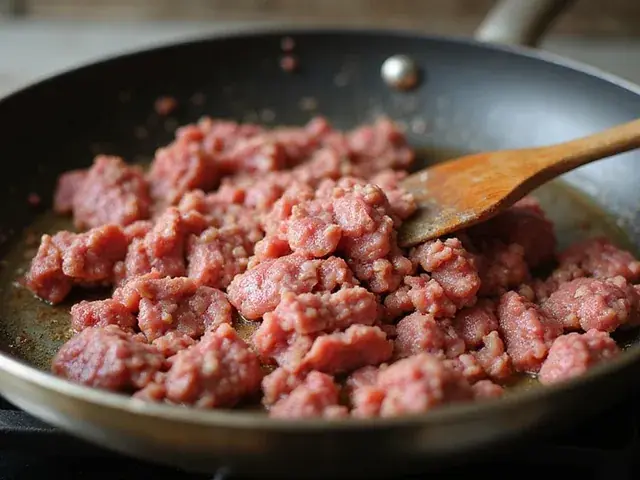
A word on the fat. Mince releases fat as it browns, and some of that fat carries flavour into the gravy. If a lot has pooled in the pan, spoon some off before the flour goes in, so the finished gravy is rich rather than greasy — but do not chase every last drop. The flour thickens what is left into the sauce, and a filling made from less mince has less fat to spare.
Stretch the filling, keep the gravy
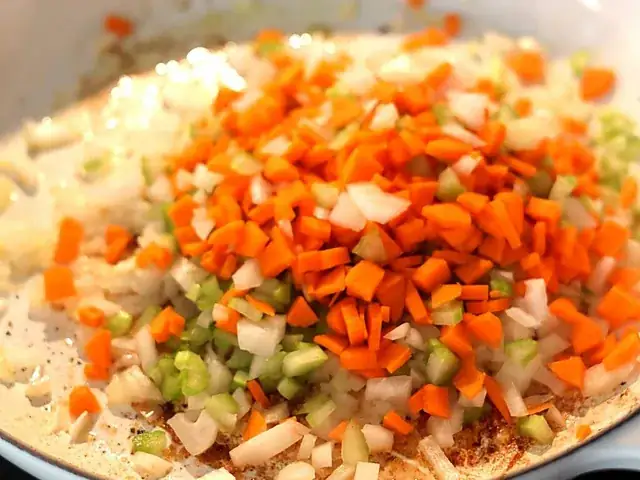
With the browning done, the filling can be stretched in three ways, and they work best combined. Extra finely diced vegetables bulk the filling out with ingredients already in the recipe. Red lentils cook down invisibly and thicken the gravy as they go. Extra frozen peas add sweetness and colour for no extra preparation. The rule that holds all three together: cut or cook the additions so they disappear into the filling's texture. A stretching ingredient you can pick out is one that reads as a substitute; one that blends in just reads as pie.
| Method | What it adds | Watch out for |
|---|---|---|
| Extra finely diced carrot, onion and celery | Bulk, sweetness and body in exactly the filling's own flavours — the simplest stretch is more of what is already there | Give them the full softening time; undercooked dice stays crunchy and stands out against the beef |
| A handful of red lentils (about 50g) | They cook down into the gravy, thickening it and adding body without a lentil texture or taste | They absorb stock as they cook, so keep an eye on the pan and top up with a splash of hot water if the gravy tightens too far |
| Extra frozen peas | Sweetness, colour and bulk, added straight from the freezer with no chopping | Add them at the very end, as in the tested recipe, so they stay bright and whole rather than simmering to mush |
| Finely chopped mushrooms | A deep, savoury flavour that sits naturally beside beef | They release a lot of water. Cook them until their liquid has bubbled away before the flour goes in, or the gravy thins |
How far can the mince come down? As an adaptation, around 350g of well-browned mince, stretched as above, still gives a filling that tastes of beef first — below that, the pie starts to taste of its stretchers and stops being cottage pie in anything but shape. That figure is guidance from the technique, not a tested quantity; the tested recipe stands at 500g, and if you want the guaranteed result, that is the one to cook. Season a stretched filling carefully at the end: more vegetables and lentils in the same 400ml of stock means the salt and pepper need checking rather than assuming.
Frozen vegetables are fine
Nothing in this pie requires fresh vegetables beyond the base, and frozen ones are not a compromise. The tested recipe already uses frozen peas, stirred through at the end. Frozen diced carrot, frozen mixed vegetables and frozen sweetcorn all work in a stretched filling too, with one adjustment: frozen vegetables carry surface ice and release water as they heat, so add them early enough for that liquid to simmer away before the flour's gravy is judged. Add frozen peas from frozen, at the end, exactly as the recipe does. Add frozen diced vegetables earlier, with the softened base, and give the pan a few extra minutes.
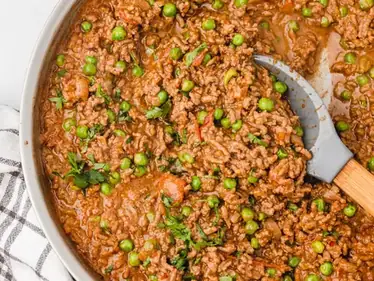
The mistake to avoid is judging the gravy too soon. A pan that looks wet five minutes after frozen vegetables go in usually settles once their liquid has bubbled off and the flour has done its work. If yours genuinely stays loose — edges pooling, a spoon leaving a watery trail — our guide to fixing a watery cottage pie works through the causes in order, from under-reduced gravy to wet mash.
Potatoes: floury matters more than the name
The mash is half the pie, and the tested recipe calls for 900g of floury potatoes — Maris Piper or King Edward are the names it gives. What the mash actually needs is the floury texture: a potato that breaks down fluffy and dry, drinks up the butter and milk, and forks into ridges that crisp. Any floury potato gives you that, whatever variety the bag says, so buy on texture rather than chasing a named variety. Waxy potatoes are the false friend here — they mash gluey and sit heavily on a filling that is already working hard.
Sound older potatoes are fine too, as long as you cut away any green patches or sprouting eyes thoroughly. Peel a little more generously if the skins are rough; the mash forgives it. Our guide to the best potatoes for cottage pie mash compares the main varieties properly if you want to choose with more detail.
Use the whole pack, waste nothing
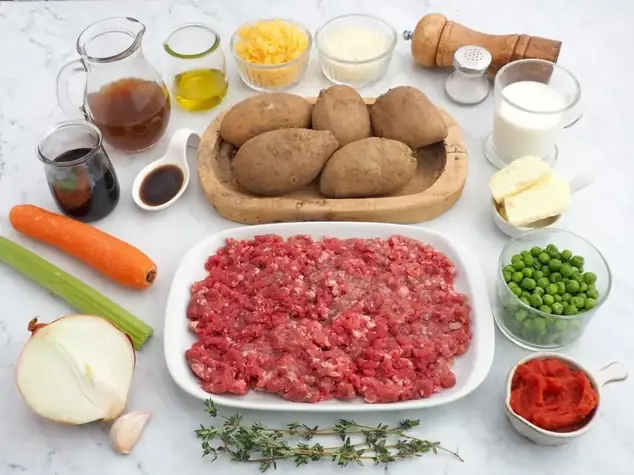
Stretching goes beyond the pie itself. Stock is the clearest example: if you make stock from a cube or a pot, make up the full quantity rather than a part-measure, use the 400ml the filling needs, and keep the rest. Leftover stock keeps in the fridge, covered, and should be used within 2 days, or it freezes well in a small container or an ice-cube tray for the next pie, soup or gravy. The same logic applies to tomato purée: what is left in the tin spoons into a small tub and freezes in tablespoon portions, ready to drop into the next filling without opening a new tin. Dried thyme and bay leaves, once bought, keep for months in a cupboard and appear in pie after pie, so nothing about the seasoning of this recipe is a one-off purchase. The point is not any single saving — it is that a well-used store cupboard means each pie only needs its fresh ingredients bought for it.
Cook once, eat twice: batch cooking and freezing
The surest way to make a pie go further is to make more of it while the oven is on anyway, and freeze the surplus properly. The tested recipe doubles happily: the method does not change, only the dish needs to be bigger, or use two dishes. A doubled batch gives you tonight's pie plus a second pie, or a set of single portions, for the freezer. Our guide to freezing cottage pie covers wrapping, defrosting and reheating in full, and our batch cooking guide works through the planning — what to cook when, and how to portion it so nothing lingers.
Portions are the flexible form. A whole frozen pie commits you to feeding four; portions defrost overnight, reheat one at a time, and mean a stretched batch genuinely covers several meals. Whichever form you freeze, cool the pie and get it into the fridge within 1 to 2 hours of cooking, and freeze it from chilled rather than warm.
Leftovers, kept safely
A stretched pie keeps by exactly the same rules as the tested one, and the rules are worth following precisely because batch cooking means more food in the fridge. Cool leftovers and refrigerate them within 1 to 2 hours. Keep the fridge between 0 and 5°C, and eat fridge-stored leftovers within 2 days. When you reheat, heat the pie only once, until it is steaming hot all the way through — a food probe at the centre should read at least 75°C. Food that has been reheated once does not get reheated again, and food that has sat past its 2 days does not get rescued by a hotter oven. Throwing away a doubtful portion is not waste in the way eating it could be; it is the rule working as intended.
Questions people ask
Around 350g, stretched with extra vegetables, red lentils and peas, is a sensible floor: the filling still tastes of beef first, provided the mince is browned hard. Below that the stretchers take over the flavour. This is an adaptation, not a tested quantity — the kitchen-tested recipe uses 500g and serves four.
No. A small handful — about 50g — cooks right down into the gravy during the simmer. It thickens the sauce and adds body, but there is no lentil texture left to notice and the flavour stays with the beef, especially if the mince was browned properly. Brown or green lentils would be a different matter: they hold their shape and do read as lentils.
Yes. Frozen peas already belong in the tested recipe, added at the end. Frozen diced carrot or mixed vegetables work too — add them earlier than fresh ones so the water they release has time to simmer away before you judge the gravy, and do not add extra stock to compensate.
It can, if the extra vegetables' liquid is never cooked off. Soften the base fully, cook mushrooms until their liquid has gone, let frozen vegetables shed their water in the pan, and simmer the finished filling until the gravy coats a spoon. Our watery cottage pie guide covers every cause and the rescue for each.
For stretching purposes, one big batch, portioned after cooking, is the more flexible route: the portions freeze and defrost individually, so you reheat only what a meal needs. Two small pies suit two households or two different days' fresh baking. Either way, the method is the tested recipe's — only the dishes change.
Refrigerate leftovers within 1 to 2 hours of cooking, in a fridge between 0 and 5°C, and eat them within 2 days. Reheat only once, until steaming hot all the way through, with the centre at least 75°C on a probe if you use one. A reheated pie should never be reheated a second time or put back in the fridge for another day.
Start from the tested cottage pie recipe and change one thing at a time: first the browning, then one stretcher. When you cook a batch for the freezer, the freezing guide and the batch cooking guide will take it from the oven to the table a second time, safely.