Cottage Pie vs Shepherd's Pie
By Michael · Published 4 November 2026
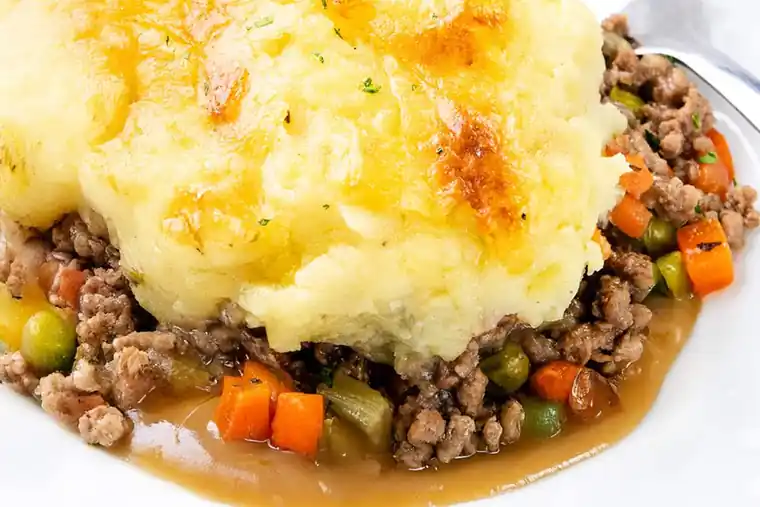
They look the same in the dish: savoury mince in gravy under a golden cap of mashed potato. So what is the difference between cottage pie and shepherd's pie? One thing — the meat.
The difference at a glance
| Cottage pie | Shepherd's pie | |
|---|---|---|
| Meat | Beef mince | Lamb mince |
| Stock | Beef stock | Lamb stock (or beef, if that is what you have) |
| Topping | Mashed potato, spread to the edges and ridged with a fork — the same for both | |
| Vegetables | Onion, carrot and celery are the usual base for both; peas are common in both | |
| Herbs | Thyme is the classic choice | Rosemary or thyme — rosemary is lamb's oldest partner |
| Name in print | By the late 1700s | From the mid 1800s |
| Named for | The cottage — these were the cheap, filling pies of cottage homes once potatoes became a staple | The shepherd — and the sheep he kept |
The one difference that matters: the meat
Modern British usage is settled, even if old cookery books were looser about it. Menus, supermarkets and recipe publishers all follow the same rule: beef means cottage pie, lamb means shepherd's pie. The rule is useful because it tells the person eating what is under the mash before the first spoonful.
It also matters in the cooking. Lamb mince is richer and slightly sweeter than beef, with more fat; it browns fast and can make a greasier gravy if the fat is not spooned off. Beef mince gives a deeper, more savoury gravy and is the more forgiving of the two. The method does not change — brown the meat well, soften the vegetables, simmer the gravy until it thickens — but lamb asks for a little more care with the fat.
Where the names come from
Cottage pie is the older name. It appears in print by the late eighteenth century, when potatoes — cheap, filling and easy to store — had become the food of cottage households, and a potato topping was the economical way to stretch leftover roast meat into another dinner. The earliest versions were made with whatever meat was left, mutton included.
Shepherd's pie came later, in the mid nineteenth century. The name ties the pie to the shepherd and his flock, and over time it settled on lamb and mutton — the shepherd's own meat. As the two names settled into their modern meanings, cottage pie kept the beef and shepherd's pie kept the lamb.
So the history runs the opposite way to what many people expect: the names began loosely, and the tidy beef-versus-lamb rule is the modern agreement, not an ancient law. It is still the rule worth following, because it is the one every cook, shop and menu now understands.
Everything else is shared
Apart from the meat, the two pies are built the same way, layer for layer:
- The filling: mince browned properly — not steamed grey — then onion, carrot and celery softened in the same pan, a spoonful of flour and tomato purée, and stock simmered down to a gravy thick enough to coat a spoon.
- The topping: floury potatoes mashed with butter and warm milk, spread over the filling while it is still warm, sealed to the edges of the dish and ridged with a fork so the ridges turn crisp and golden.
- The bake: hot oven until the top is golden and the filling bubbles at the edges — the bubbles are your sign the centre is properly hot.
Our full cottage pie recipe gives the beef version step by step, with photographs and timers. Every step in it works exactly the same way for a shepherd's pie — you simply swap the meat, as set out below.
The cheese question
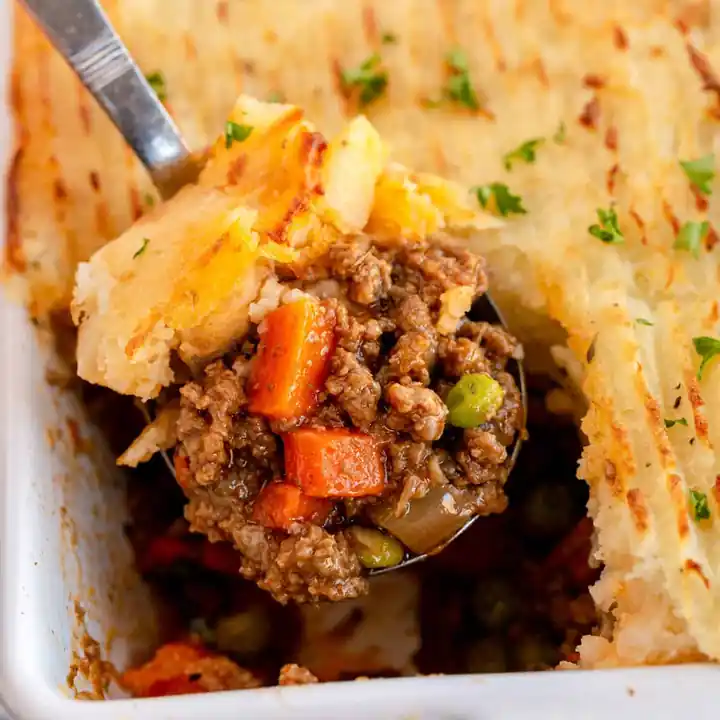
Neither pie had cheese on it originally. Grated Cheddar over the mash is a modern addition, and a popular one — it gives a crisper, more savoury crust — but it belongs to neither pie's traditional form. If you like it, it works just as well on lamb as on beef; our cheese-topped variation shows how much to use and when to add it. Purists leave it off; most families, in our experience of the debate, quietly put it on.
Close relations worth knowing
Cumberland pie is the northern cousin: minced meat under mash, but finished with a layer of breadcrumbs and cheese for a crunchier top. Shepherdess pie is the traditional name for the meat-free version, usually built on lentils and vegetables — our lentil variation follows the same idea with a potato top. Pies topped with pastry instead of potato are a different family altogether; the potato cap is what makes these pies what they are.
How to turn our cottage pie into a shepherd's pie
This adaptation has not been kitchen-tested separately — the main recipe was tested with beef — but the method is unchanged, so the swaps are straightforward:
- Use 500g lamb mince instead of beef. Brown it in batches and spoon off most of the fat that collects before adding the vegetables.
- Use lamb stock if you have it; beef stock still works and will not make it taste of beef.
- Add 1 tsp finely chopped fresh rosemary (or ½ tsp dried) alongside — or instead of — the thyme.
- Keep every quantity, temperature and timing the same as the cottage pie recipe: 200°C conventional / 180°C fan / Gas Mark 6 for 25 to 30 minutes, until bubbling at the edges and golden on top.
- Rest for 5 to 10 minutes before serving, exactly as with the beef version.
Which one should you cook?
Cook the cottage pie if you want the deeper, beefier gravy and the more forgiving meat — it is the better pie for a first attempt, and the one this site's recipe is tested with. Cook the shepherd's pie if you like lamb's richer, sweeter flavour and do not mind skimming a little fat. Both freeze and reheat in the same way; the storage rules are covered in our FAQs.
Questions people ask
By the modern British convention, yes. Cottage pie means beef mince under mashed potato. Older recipes used whatever meat was left over, but menus, shops and recipe books now all use cottage pie for beef and shepherd's pie for lamb — and that shared rule is what makes the names useful.
You can cook it, but by the modern naming it is then a cottage pie. Nothing about the method changes — same gravy, same mash, same bake. Only the name follows the meat.
Cottage pie. Its name is in print by the late 1700s, when potato-topped pies became a staple of cottage cooking. Shepherd's pie appears later, in the mid 1800s.
No. Cheese is a modern extra on both pies. The traditional top is plain mashed potato, ridged with a fork so the ridges crisp. Cheese gives a richer crust and plenty of cooks add it — but it is an addition, not part of either pie's original form.
Yes. Cool the pie quickly, refrigerate within 1 to 2 hours, and freeze in portions if you like. Defrost in the fridge, then reheat once until steaming hot all the way through. The full storage guidance is in our FAQs.
Ready to cook? Start with the tested cottage pie recipe — and if lamb is your meat, make the swaps above and call it by its proper name.