
Why Is My Cottage Pie Watery?
By Michael
You cut the first slice and the gravy runs across the dish like soup. The mash floats, the portions will not hold, and dinner looks flooded. A watery cottage pie is one of the most common problems with this dish — and one of the easiest to diagnose.
First, know what the filling should look like
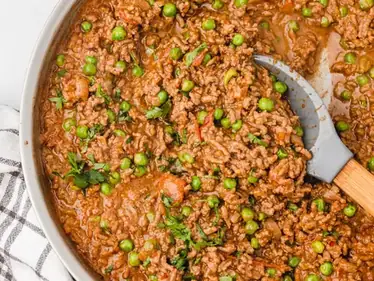
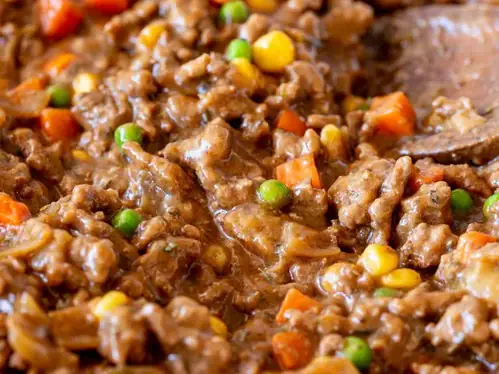
The filling is ready for its topping when the gravy coats the back of a spoon. Draw the spoon across the bottom of the pan and the trail should hold for a moment before closing. That consistency — thick, glossy, slow-moving — is what you are aiming for at every stage.
Our cottage pie recipe was kitchen-tested with 500g of beef mince and 400ml of hot beef stock. It reaches that spoon-trail stage reliably, but only when each step is given its time. If your pie ran wet, one of the six causes below will almost certainly explain it.
Check the filling twice: once as the gravy comes together, and again just before the mash goes on. Peas, resting meat juices and a final minute of simmering can all change the consistency between the two checks. The second check is the one that counts, because after the topping there is no easy way back in.
The six causes at a glance
| Cause | What happens | Fix |
|---|---|---|
| Mince steamed, not browned | Crowded mince cooks in its own juices. That liquid stays in the pan and thins the gravy later. | Brown in batches in a hot pan. Cook until the pan juices have fried away. |
| Wet vegetables | Frozen vegetables added straight in, in large amounts, melt into the filling. Raw vegetables release their water into the gravy too. | Soften onion, carrot and celery in the pan first. Add frozen peas at the end, as the recipe does. |
| Too much stock, too short a simmer | The gravy never gets the chance to reduce, so it stays thin no matter what else you do. | Simmer until a spoon drawn across the pan leaves a brief trail. |
| Too little flour | One tablespoon of flour is the low end for 400ml of stock. Some pans and some mince need more help. | Use 1½ tablespoons of plain flour as the first adjustment. |
| Wet, loose mash | Undrained potatoes and too much milk make a sloppy topping. Its moisture seeps down into the filling as the pie bakes. | Drain well, let the steam escape, and add the warm milk gradually. |
| No rest before serving | Straight from the oven, the gravy is at its thinnest and still steaming. Cut in and it floods the dish. | Rest the baked pie for 5 to 10 minutes so the juices settle and thicken. |
Start with the browning
The first cause is the most common, and it happens before the gravy even exists. Mince tipped into a pan in one large pile cannot brown. The pan temperature drops, the meat releases its juices, and it steams greyly in a puddle of its own making.
Those juices do not disappear. If the stock goes in while the pan is still wet, every drop of that liquid joins the gravy. The flour and the simmer then have far more water to deal with than the recipe allowed for. Brown the mince in batches instead, in a properly hot pan, and keep cooking until the sizzling turns from bubbling to frying. Only then have the vegetables their turn.
Give the simmer time to work
Reduction is not a passive step. While the filling simmers, water leaves as steam and the gravy concentrates. A filling that looks promising at five minutes can still be far too thin if it needed fifteen.
The tested recipe uses 400ml of hot beef stock, 2 tablespoons of tomato purée and 1 tablespoon of Worcestershire sauce. The tomato purée adds body as well as flavour, but the real thickening comes from the flour and the simmer together. Keep the lid off or ajar so the steam can escape, and judge by the spoon test, not by the clock. When the gravy coats a spoon and holds a trail, it is done — whatever the timer says.
Mind the vegetables and the mash
Vegetables hold a great deal of water. Onion, carrot and celery softened in the pan first give much of theirs up before the stock arrives. Frozen vegetables are the bigger trap: tipped in straight from the freezer in large amounts, they melt into the filling and quietly top up the liquid. The tested recipe adds just 100g of frozen peas, stirred in at the very end. Copy that pattern with any frozen additions.
The mash can flood a pie from above. Potatoes boiled and mashed while still steaming wet, or loosened with too much milk, make a topping that slumps and seeps. Drain the potatoes thoroughly, let the steam escape for a minute, then add the warm milk a little at a time. If the mash itself sinks down into the filling, that is a related but separate problem, covered in our guide to why mash sinks into cottage pie.
Two thickeners, two different jobs
Plain flour and cornflour both thicken gravy, but they belong at opposite ends of the cooking. Plain flour goes in early, with the vegetables, and cooks in the fat in the pan. That early cooking matters: flour stirred into hot liquid at the end can taste raw and pasty. The flour then thickens gradually as the filling simmers, which is why the tested recipe builds it in from the start.
Cornflour is the rescue tool. Mixed with cold water into a slurry, it thickens almost as soon as it meets the hot filling, so it suits a gravy that is still thin at the last moment. Use it sparingly — roughly a teaspoon at a time — because too much turns the gravy gluey rather than silky. Think of flour as the plan and cornflour as the correction.
Rescue a pie that is already made
If the filling is made but not yet topped: you are in the easiest position. Return it to the hob and simmer, uncovered, until the spoon test passes. If time is short, mix 1 teaspoon of cornflour with a little cold water into a smooth slurry, stir it through the hot filling, and simmer for another minute or so. The gravy will thicken as it comes back to the boil.
If the pie is assembled but unbaked: bake it for longer, uncovered, and check the centre before serving. As rough guidance, an extra 5 to 10 minutes lets more steam escape and firms the filling. The centre should be bubbling and piping hot — a food probe should read at least 75°C.
If the pie is baked and already sliced: tonight, serve it in bowls rather than on flat plates, and use a slotted spoon so the thinnest gravy stays behind in the dish. Let each portion sit for a few minutes before eating; the gravy settles noticeably as it cools a little. Leftovers often slice far better the next day. Cool and refrigerate them within 1 to 2 hours, eat within 2 days, and reheat only once, until steaming hot all the way through.
Stop it happening next time
- Brown the mince in batches, and cook off the pan juices before anything else goes in.
- Soften the onion, carrot and celery in the pan before adding the stock.
- Simmer until the gravy coats a spoon and holds a trail across the pan.
- If your gravy tends to run thin, use 1½ tablespoons of flour instead of 1 — the first and simplest adjustment.
- Add frozen peas at the end, in the recipe's quantity, not by the mugful at the start.
- Drain the potatoes well and add the warm milk gradually.
- Rest the baked pie for 5 to 10 minutes before you cut it.
Questions people ask
Not neatly. Cornflour only thickens when it is stirred through hot liquid and brought to the boil, and you cannot stir a baked pie without destroying the top. Use a cornflour slurry at the pan stage instead. A pie that is already baked is best served in bowls this time.
Not in the recipe's quantity. The tested recipe stirs in 100g of frozen peas at the end, and their meltwater is negligible. Problems start when large amounts of frozen vegetables go in early: they thaw into the filling and add liquid the simmer never accounted for.
A flour-thickened gravy firms up as it cools slightly, and the bubbling and steaming settle down. Cut the pie straight from the oven and the gravy is at its thinnest and most mobile. Five to ten minutes of rest is often the whole difference between a slice and a flood.
They thicken, but reduction is the better fix. Simmering costs nothing and concentrates the flavour you already have. Granules add salt and a different, more processed flavour, and they are easy to overdo. If you use them, stir a small amount into the filling in the pan, before the mash goes on — never as a patch afterwards.
Work backwards. If the gravy passed the spoon test before the mash went on, the extra liquid arrived either as pan juices from steamed mince or as meltwater from frozen vegetables. If it never passed the spoon test, the cause is simpler: too much stock for the simmer it got, or too little flour. The layer under the mash collects whatever is loose, which is why it always looks worst there.
A watery pie is a filling problem, not a failed dinner — and it is nearly always preventable. Follow the tested method in our cottage pie recipe, judge the gravy by the spoon rather than the clock, and check our FAQs for storage and reheating answers.