
Why Does the Mash Sink into Cottage Pie?
By Michael
You spread the mash on beautifully. Twenty minutes later it has slumped into the filling, the top is patchy, and mince is bubbling up through the gaps. Sinking mash is a problem at the join between the two layers — and it has three usual causes.
How the two layers should meet
Think of the mash as a lid, not a blanket. It needs three things to work. The filling should be warm and settled, its gravy thick enough to hold a spoon's trail. The mash should be firm but still spreadable. And the mash must meet the dish on every side, sealed to the edges with no gaps.
When those three conditions hold, the layers behave. Our cottage pie recipe builds the join exactly this way: hot filling, mash spread over it while both are warm, sealed and ridged, then baked at 200°C (180°C fan, Gas Mark 6) for 25 to 30 minutes. Sinking starts when one of the three conditions is missing.
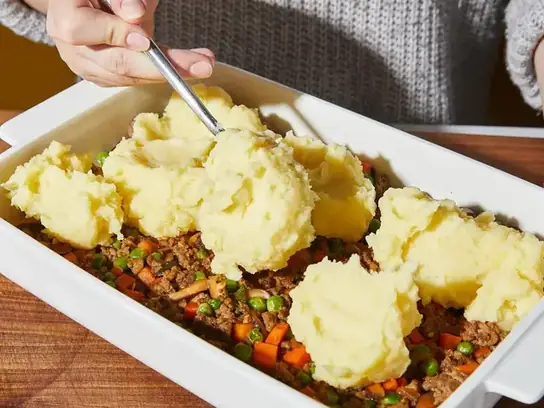
The three causes
A sinking top is sometimes blamed on the mash alone, but the filling is just as often responsible. If the filling itself is thin and soupy, start with our guide to why cottage pie turns out watery. Otherwise, check these three causes in order.
| Cause | Why it sinks | Fix |
|---|---|---|
| The filling is too liquid | Soft mash cannot rest on a liquid. It mixes into the gravy instead of sitting on it, and the two layers merge as the pie bakes. | Reduce the filling until a spoon drawn across the pan leaves a brief trail, then top it. |
| The filling was bubbling hot when topped | A fiercely steaming filling keeps pushing vapour up into the mash. The likely result is pockets under the top, which give way and let the mash slump. | Take the filling off the heat and let it settle for a few minutes, until it stops steaming hard, before adding the mash. |
| The mash was too wet, or added in one heavy dump | Waterlogged mash has no structure of its own. One large heap dropped in the middle also weighs the centre down and leaves the edges thin. | Drain the potatoes well, add the milk gradually, and spoon the mash on in dollops — edges first, then the middle. |
Bubbling at the edges is fine — breakthrough is not
Do not panic at the sight of bubbles in the oven. In the tested recipe, the pie is done when the filling bubbles at the edges and the centre is piping hot. That gentle bubbling around the rim is a doneness cue, and it means your seal is doing its job: the pressure escapes at the edge, where it belongs.
Breakthrough is different. If gravy forces up through the middle of the mash, it has found a weak or unsealed patch, and each bubble lifts the top a little further. A pie can survive one small breakthrough and still eat well, but it tells you the join failed somewhere — usually a thin patch of mash or a gap where the filling was wettest. Remember where it happened; that is the spot to reinforce next time.
A closer look at the mash
Of the three causes, the mash itself is the one entirely in your hands. Use floury potatoes — Maris Piper or King Edward — because they mash dry and light. The tested recipe uses 900g of potatoes, 50g of butter and about 75ml of warm milk. That "about" matters: pour in all the milk at once and you cannot take it back out.
Drain the boiled potatoes thoroughly and let them stand for a minute so the steam escapes. Mash with the butter first, then add the warm milk a splash at a time. Stop when the mash stands in soft peaks and holds its shape on a spoon. Mash that slides off the spoon will slide into the pie.
Then apply it gently. Spoon dollops around the edges of the dish first, then fill in the middle. Spread outwards with the back of a spoon, sealing against the dish as you go. One heavy dump in the centre presses down where the filling is hottest and deepest — which is why so many pies sink in the middle first.
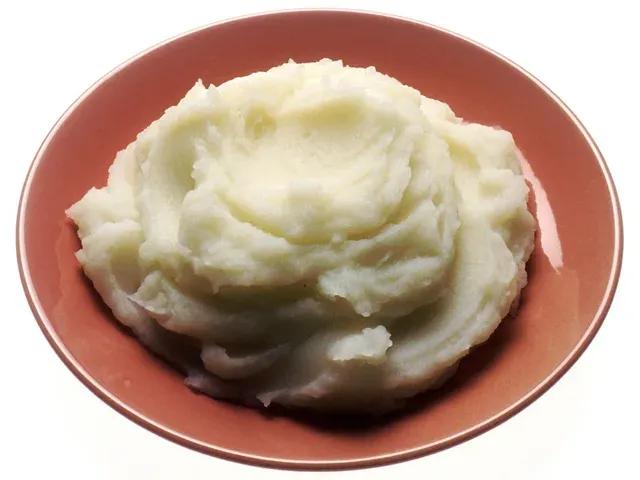
Rescue a pie mid-assembly
If the mash starts disappearing while you are still spreading it, stop adding more. Extra mash on a failing join only makes the sinking worse. Spoon off any liquid that has pooled around the edges, and blot the surface gently with a folded piece of kitchen paper.
Then lift the worst section with a wide spoon or a fish slice, working from the edge inwards. Let the filling settle for a few minutes off the heat. Meanwhile, make a small amount of firmer mash — a potato or two, mashed with butter and no milk — and use it to re-top and patch the weak area. Spread gently, seal the edges, and carry on to the oven.
If the filling itself is swimming, be honest about it: scrape the mash back into a bowl, return the filling to the pan and reduce it properly. It costs a few minutes and saves the pie. Half-measures at this stage rarely survive the oven.
If it sinks in the oven anyway: leave it alone. Opening the door and prodding the top mid-bake does more harm than good. Let the pie finish its full bake, then rest it for 5 to 10 minutes before serving. The top firms as it rests, portions hold together better than the oven door suggested, and the flavour is completely unaffected. A sunken pie is a cosmetic problem, not a ruined dinner.
Prevention checklist
- Reduce the filling until it holds a spoon's trail before any mash goes near it.
- Let a fiercely hot filling settle off the heat for a few minutes first.
- Drain the potatoes well and let the steam escape before mashing.
- Add the butter first, then the warm milk gradually — about 75ml is a guide, not a target.
- Spoon the mash on in dollops, edges first, then the middle.
- Seal the mash to the edges of the dish on every side.
Questions people ask
No — warm is right. A stone-cold filling lengthens the bake, because the centre has further to travel, and the two layers can part company when served. The practical middle ground is a filling that is hot but has settled for a few minutes, so it is no longer steaming fiercely when the mash goes on.
No. The ridges are there to crisp and catch the heat; they look good and taste better, but they do no structural work. Sealing matters far more. A smooth top sealed to the edges will hold, while a beautifully ridged top with gaps at the sides will still bubble through and slump.
Yes — assembling ahead is one of the best ways to cook this dish. Cool the assembled pie promptly, refrigerate it, and allow extra time in the oven when you bake it from chilled, checking that the centre is piping hot before serving. Our FAQs cover make-ahead timing and safe storage in full.
The centre is where the filling is deepest and stays hottest longest, so it steams the hardest. It is also where a single heavy heap of mash lands, if the topping went on in one go. Dollops around the edges first, sealed as you spread, spread the weight and protect the middle.
No. Cheese sits on the surface and melts over it; it cannot seal the join underneath, where the sinking happens. Add cheese for flavour and a richer crust — our variations page covers the cheese-topped version — but fix the filling and the seal first.
A sinking top is rarely about the potatoes alone — it is about how the two layers meet. Get the filling to spoon-trail thickness, spread firm mash in dollops and seal the edges, and the top from our cottage pie recipe will stay exactly where you left it.