What to Serve with Cottage Pie
By Michael
Cottage pie arrives at the table rich, soft and savoury, and it needs very little beside it. The best sides are the ones that add what the pie lacks: something green, something sharp, and enough gravy to go round. This guide works through the vegetables, the extras, and the things best left off the table.
Start with the plate, not the side dishes
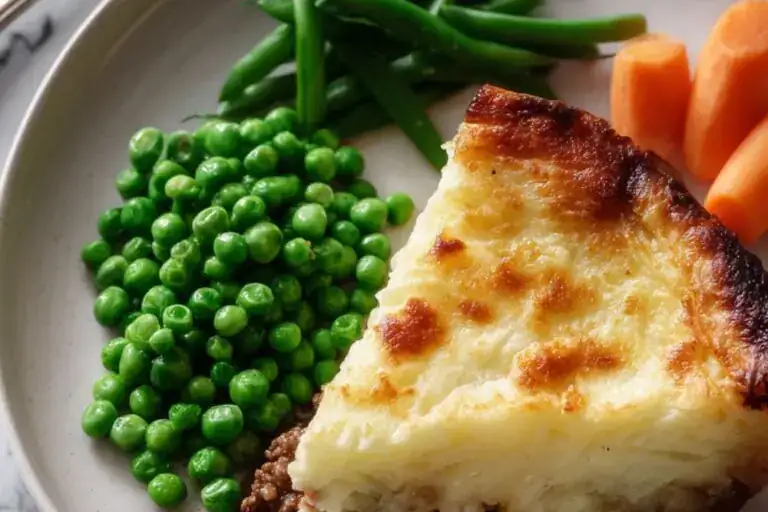
Think about what the pie itself is. Mince in gravy, under a soft blanket of mash: nearly everything on the fork is soft. Nothing crackles, nothing crunches, and nothing cuts through the richness. That is precisely why the wrong sides make the meal feel heavy rather than comforting.
Judge every side by the contrast it brings. Green vegetables add colour and a slight bite. Something pickled or mustardy adds sharpness, which resets your mouth between forkfuls. Extra gravy ties the whole plate together, because the pie's own filling rarely stretches to the vegetables as well.
Keep the side cooking simple, too. The pie has already taken your time and your oven. Vegetables that steam or boil, and extras that come out of a jar, are not a lazy shortcut. They are the correct division of labour, and they leave the cook free to serve the pie properly.
Vegetables that work
Steamed or boiled greens are the backbone of the plate. Savoy cabbage, shredded and cooked until just tender, is the classic partner for a beef pie. Green beans and broccoli do the same job in a different shape. All three keep a little bite if you watch them, and all three carry gravy well.
Sweet vegetables provide the other kind of contrast. Carrots echo the carrot already diced in the filling and bring an orange that the plate needs. Cook them plainly — boiled or steamed, or roasted if the oven is on anyway. Peas sit happily alongside too; they are in our cottage pie recipe's filling already, but a small bowl of extra peas on the table pleases most people.
Cauliflower also works, boiled or steamed and served plain. What matters more than the choice is the timing. Greens should be cooked at the last minute and taken straight to the table, because they dull in colour and soften as they sit waiting in a hot serving dish.
One vegetable, cooked well, beats three cooked carelessly. If the table is small, pick a green and stop there, then add the sharp extra and the gravy. The plate will look complete because it is complete.
| Side | Why it works | Effort |
|---|---|---|
| Steamed savoy cabbage | Green, faintly bitter, soaks up gravy | About 10 minutes on the hob |
| Green beans | Fresh flavour and a little bite | About 5 minutes, steamed or boiled |
| Carrots | Sweet against the savoury filling | Boiled, steamed, or roasted with the pie |
| Pickled red cabbage | Sharp and crunchy; cuts the richness | None — straight from the jar |
| Extra beef gravy | Brings pie and vegetables together | About 5 minutes in a small pan |
| A plain bread roll | Mops up the last of the gravy | None; warm it through if you like |
Extra gravy: the jug in the middle
A cottage pie makes some gravy as it bakes, but rarely enough. The mash drinks its share through the forked ridges, and what remains in the dish spreads thinly across four plates. Most tables are happier with a jug of extra gravy standing in the middle.
The simplest jug starts from the pie's own flavours. Make it while the pie rests: 300ml of hot beef stock in a small pan, with a teaspoon of cornflour mixed to a paste with a tablespoon of cold water. Whisk the paste in and simmer for a minute, until the gravy coats the back of a spoon. A dash of Worcestershire sauce gives it the same savoury depth as the filling.
Serve the gravy hot and let people pour their own. It settles the one worry this meal reliably causes — running out of gravy halfway through — and it turns plain boiled cabbage into something people go back for.
Sharp contrasts: pickles and mustard
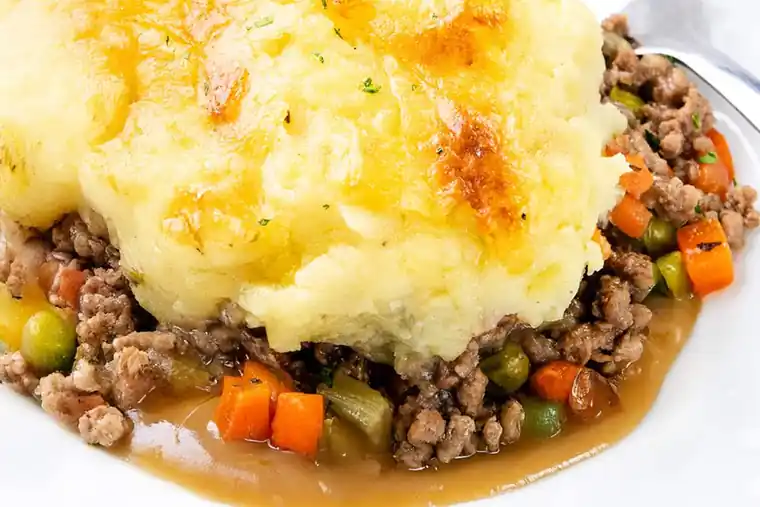
Pickled red cabbage is the traditional sharp note beside a rich pie. It is crunchy and vinegary, and its deep pink looks striking against the brown and gold of the plate. Pickled onions do the same job in smaller bites. Both come from a jar, keep for weeks in the fridge once opened, and ask nothing of the cook on the day.
English mustard belongs on the table as well, in its pot, for those who want it. Beef and mustard are an old pairing, and a small amount at the side of the plate lifts the whole meal without changing the pie itself. Brown sauce is the other traditional bottle at a British table. A little alongside the pie is a matter of household taste, and no rule decides it either way.
Sharpness works because the pie cannot provide it. Gravy is rich, mash is soft, and mince is savoury. A forkful of something acidic in between keeps the meal tasting fresh from the first bite to the last.
Bread for the juices
A slice of plain bread, or a soft roll, is the traditional way to finish the gravy left on the plate. It is entirely optional, and plenty of homes never bother. But when the gravy is good, bread makes sure none of it goes back to the kitchen.
Serve it plain — no garlic butter and no herbs. The bread is there for the juices, not to compete with them. One roll per person is plenty, warmed through in the cooling oven while the pie rests, if the oven is still warm.
What to skip
Skip the second helping of richness. Cauliflower cheese, a creamy gratin, or buttered mashed swede all fight the pie instead of helping it. The plate ends up soft on soft and rich on rich, and the meal becomes heavy rather than satisfying.
Skip a second potato dish for the same reason. The pie already wears its potatoes on top. Chips, roast potatoes or an extra bowl of mash add bulk without contrast, and they crowd out the green and sharp elements the plate actually needs.
Finally, skip anything that needs the oven at a different temperature, or your attention at the last minute. Sides should make serving easier, not busier. If a side dish cannot wait quietly or cook quickly on the hob, it is the wrong side for this meal.
What to drink
Keep the drinks as plain as the sides. A pot of tea suits the meal, and the weather it is usually eaten in. Ale or bitter is the traditional pub-style pairing for anyone who wants a beer with it. For children, squash or water is all that is needed. Nothing sweet or fizzy is required; the plate is rich enough already.
Questions people ask
Yes, if it is a sharp one. A green salad with a vinegar- or mustard-based dressing gives the same contrast as pickles: freshness and bite against the soft, rich pie. Avoid creamy dressings, which only add more of what the pie already has. Serve the salad beside the pie on the plate, not under it, so the leaves stay crisp.
Most tables appreciate it. The pie's own gravy is partly soaked into the mash and partly left in the dish, so a small jug made alongside means every plate gets its share. If your filling was made loose and juicy, you might manage without — but the jug takes five minutes and settles the question.
Keep them plain, sweet and separate. Peas, carrot batons and sweetcorn are mild, easy to eat and easy to pick around. Serve the vegetables beside the pie rather than mixed through it, and let children pour gravy or leave it. Pickles and mustard can stay at the adults' end of the table.
Mostly they do not need to be. Greens take five to ten minutes and are best cooked at the last minute. Pickles and mustard come straight from jars. Gravy can be made while the pie bakes and kept warm, or reheated gently as the pie rests. To get ahead, wash and prepare the vegetables in the morning; keep the actual cooking for the end.
It is not traditional — Yorkshire pudding belongs with roast beef, not with a pie that already has a potato top. But nothing stops you. The batter puffs up, holds gravy beautifully, and plenty of households would call that a good enough reason. You would be starting a family habit of your own rather than following an old one.
The pie does the hard work; the sides only frame it. Make the cottage pie recipe, pick one green and one sharp from this page, and put a jug of gravy in the middle of the table. If the pie is being cooked ahead of time, our guide to making cottage pie ahead sets out the timings, and the variations page offers eight ways to change the pie itself.