
Leftover Roast Beef Cottage Pie
By Michael
A Sunday roast often leaves more beef than anyone can face cold on Monday. Turned into a cottage pie, it becomes a proper second dinner — but the beef has already been cooked once, so this version is built around food safety first and flavour a close second.
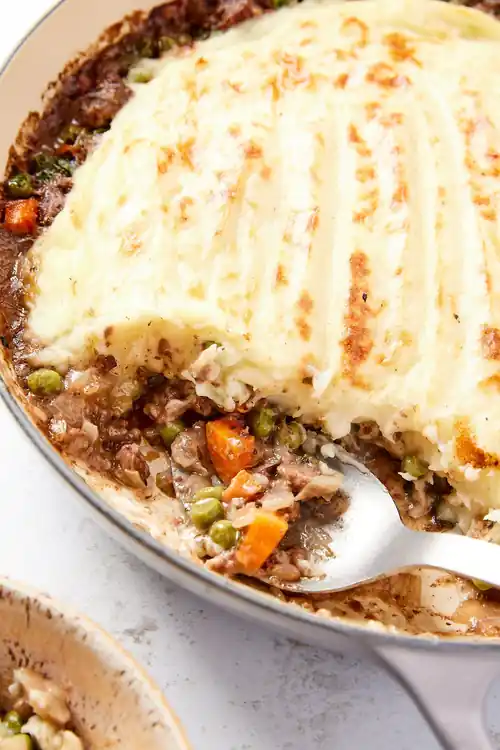
A proper second dinner from the roast
Cottage pie began as a way of using up cooked meat, so a pie made from the remains of a roast is closer to the original idea than a pie made from raw mince. The beef is already tender and full of flavour. The gravy and the mash do the rest of the work.
The method is close to our cottage pie recipe, but it is not identical. Raw mince is browned and then simmered in its gravy. Cooked roast beef needs the opposite treatment. Simmer it for half an hour and it turns dry, stringy and grey. In this version the sauce is made and simmered first, the beef joins it at the end, and the oven finishes the job.
One honesty note before the method. The recipe on this site was kitchen-tested with fresh beef mince. This leftover version is an adaptation of that tested recipe and has not been separately kitchen-tested, so any time that belongs to this version alone is marked as an estimate. The safety rules, on the other hand, are not estimates — they are the whole point of the pie.
The rule that governs everything: the clock starts at the roast
Most mistakes with leftovers happen before the pie is even considered. The safety clock for the beef starts when the roast came off the heat, not when you decide to make a pie. A joint roasted on Sunday has used up part of its fridge life by Monday evening, and all of it by Wednesday.
Work through the beef's history honestly. It should have been carved, cooled and put into the fridge within 1 to 2 hours of the roast finishing — not left on the side overnight. It should have been stored covered, in a fridge running between 0 and 5°C. And it should be eaten within 2 days of the day it was cooked.
If any part of that history is missing or doubtful, the decision is already made. Beef that sat out all afternoon, beef from a fridge that runs warm, or beef whose age nobody can quite remember does not go into the pie. Throw it away. A pie is never worth a bout of food poisoning.
| Stage | The rule |
|---|---|
| Straight after the roast | Cool the leftover beef and refrigerate it within 1 to 2 hours of cooking |
| Storage | Covered, in a fridge between 0 and 5°C |
| The deadline | Use within 2 days of the day the beef was roasted — the clock does not restart on pie day |
| Making the filling | Simmer the sauce first; add the beef at the end, just to warm through |
| The bake | This is the beef's one reheat: the centre must be steaming hot and read at least 75°C |
| After the pie | The beef has now been reheated once, so the pie is not reheated again |
What you need
The vegetables, gravy ingredients and mash are exactly those of the tested recipe. Only the beef changes: the cooked roast beef takes the place of the 500g of raw mince. Use roughly the same generous amount of beef as the mince version carries — a good pile of chopped or shredded roast beef. A little more or less still works, but keep the sauce quantity the same.
- Cooked leftover roast beef, chopped into bite-sized pieces or shredded, fat and gristle trimmed away
- 1 tbsp sunflower or vegetable oil, or dripping saved from the roast
- 1 large onion, finely chopped
- 2 carrots, finely diced (about 200g)
- 2 celery sticks, finely chopped
- 2 garlic cloves, crushed or finely chopped
- 1 tbsp plain flour
- 2 tbsp tomato purée
- 1 tbsp Worcestershire sauce
- 400ml hot beef stock in total — leftover gravy from the roast can make up part of this
- 1 tsp dried thyme, or the leaves from 2 sprigs of fresh thyme
- 1 bay leaf
- 100g frozen peas
- Salt and black pepper
- For the mash: 900g floury potatoes, 50g butter, about 75ml warm milk
Keep the beef in the fridge while the sauce is made. Cold meat, handled briefly and added late, spends the least possible time in the temperature range where bacteria grow.
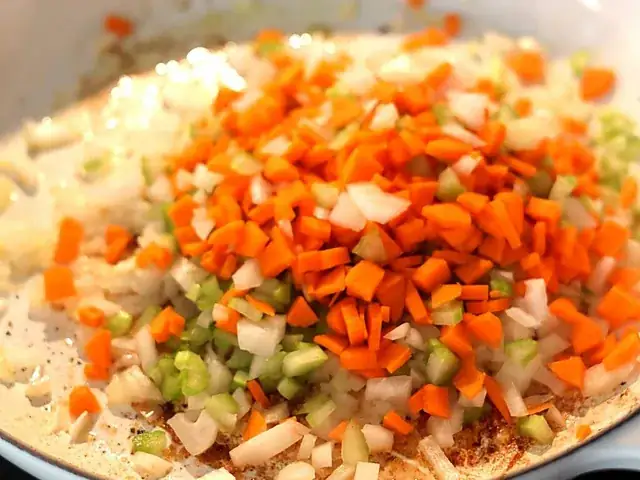
The method, step by step
- Prepare the beef. Take the cold roast beef out of the fridge and cut away any fat, skin or gristle. Chop it into bite-sized pieces or pull it into shreds with two forks. Mixed sizes are fine. Set it aside, still cold.
- Soften the vegetables. Warm the oil or dripping in a wide pan over a medium heat. Add the onion, carrots and celery with a pinch of salt and cook for about 8 to 10 minutes, stirring now and then, until the onion is soft and the carrot is losing its rawness. Stir in the garlic for the last minute.
- Build the gravy. Sprinkle over the plain flour and stir it through the vegetables for a minute. Stir in the tomato purée, then pour in the hot stock a little at a time, stirring as you go so the gravy stays smooth. Add the Worcestershire sauce, thyme and bay leaf.
- Simmer the sauce on its own. Let the gravy bubble gently for about 15 minutes (estimate), until it has thickened enough to coat the back of a spoon. This simmer belongs to the sauce, not the beef. Taste and season with salt and pepper now, while you can still adjust it freely.
- Add the beef at the end. Stir the cold beef and the frozen peas into the hot sauce. Keep the pan on a low heat for about 3 to 5 minutes (estimate), just until the beef is warmed through in the sauce. It is already cooked; you are warming it, not cooking it a second time on the hob. Take the pan off the heat and remove the bay leaf.
- Make the mash. While the sauce simmers, boil the potatoes in salted water until tender, drain them well and let them steam dry for a minute or two. Mash with the butter, then beat in the warm milk a little at a time until the mash is soft and spreadable. Season with salt and pepper.
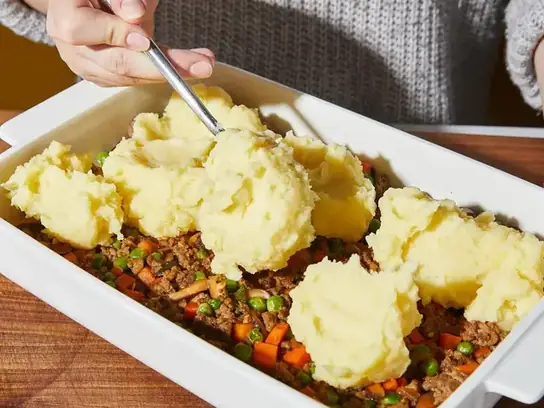
- Assemble the pie. Heat the oven to 200°C conventional / 180°C fan / Gas Mark 6. Spoon the filling into an oven dish of about 2.5 to 3 litres, then spoon the mash over the top in large dollops. Spread it to the edges so it seals the filling in, and ridge the surface with a fork.
- Bake, and check the centre. Bake for about 25 to 30 minutes (estimate), until the top is golden and the filling is bubbling at the edges. Then check the centre with a food probe: it must read at least 75°C. Without a probe, push a knife into the centre, leave it for a few seconds and check that the filling is steaming hot all the way through. If the centre is only warm, give the pie more time. This bake is the beef's one reheat, so "warm" is not done.
- Rest and serve. Rest the pie for 5 to 10 minutes before serving, as with the tested recipe. The gravy settles, the portions hold together, and nobody burns their mouth on the first forkful.
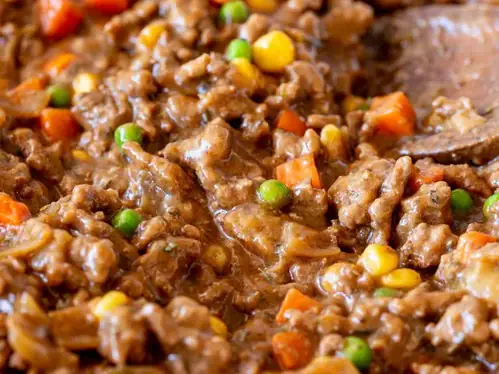
Using leftover gravy from the roast
Gravy left over from the roast is worth using — it carries the flavour of the joint. It simply counts towards the liquid in the filling: if you have 150ml of gravy, make the total up to 400ml with hot beef stock.
Three conditions apply. The gravy must have been stored under the same rules as the beef — cooled within 1 to 2 hours and kept in the fridge. Skim off any fat that has set on its surface before you use it. And it must come to a full simmer in the pan with the rest of the sauce. Gravy that has been sitting in a jug on the counter since lunch does not qualify.
What about leftovers of this pie?
This is where the reheat-once rule bites, and it is worth being plain about it. The beef in this pie has already been reheated once — in the bake. Food safety guidance says reheated food should be reheated only once, so a pie made from leftover beef is a pie to finish on the day.
The quantities here serve four, as the tested recipe does. If fewer people are eating, scale the filling and the mash down and use a smaller dish, rather than baking a full pie and facing the leftovers question afterwards. Our general guide to reheating cottage pie covers pies made from fresh mince, which can take their one reheat the next day; this leftover version has already used its turn.
For the same reason, this is not the pie to make for the freezer. A frozen leftover-beef pie would need a second reheating after defrosting, which the rule rules out. If you want a pie waiting in the freezer, make it from fresh mince instead — the method is in our guide to freezing cottage pie.
Questions people ask
Yes, if the beef was cooled and refrigerated within 1 to 2 hours of the roast and has been kept in a fridge between 0 and 5°C. The 2-day window runs from the day of the roast, so day two is the last day for pie-making — and the pie should then be eaten on the day it is baked, because the bake is the beef's one reheat.
No. The beef was cooked at the roast, and reheated once when the pie was baked. Reheating it a second time goes against the reheat-once rule. Make only as much pie as will be eaten, and scale the quantities down if you are feeding fewer than four.
No. Cooked meat left out overnight has spent far too long in the temperature range where bacteria multiply, and thorough cooking is not a fix for that. Throw it away. The 1 to 2 hour cooling and refrigeration window is the rule that decides, and it cannot be repaired in the oven.
Yes, and it adds real flavour. It counts towards the 400ml of liquid in the filling, so top it up with hot beef stock. Skim off any set fat first, and bring the sauce to a full simmer. The gravy needs the same storage history as the beef: cooled within 1 to 2 hours and kept in the fridge.
Because the long simmer does not add safety — the oven bake, up to a centre temperature of at least 75°C, is what does that. What a long simmer does add is toughness: beef that has already been roasted dries and turns stringy. Simmer the sauce first, warm the beef through in it briefly, and let the bake finish the job.
We advise against it. A frozen pie has to be defrosted and reheated, and reheating this pie would be the beef's second reheat. For a freezer pie, use fresh beef mince and follow our guide to freezing cottage pie, which covers cooling, wrapping and defrosting in the fridge.
Leftover roast beef deserves better than a cold sandwich, and a pie is the best second act it can have. Respect the clock, build the sauce before the beef goes anywhere near it, and check the centre before serving. For the from-scratch version, start with the cottage pie recipe itself.