Cottage Pie with Cheesy Mash
By Michael
The tested cottage pie recipe already lists 50g of mature Cheddar as an optional extra. This guide is the full method for that cheesy version: where the cheese goes, when to add it, and how to get a golden, crisp top rather than a greasy one.
The cheese is already in the recipe
Cheesy mash is not a new recipe bolted onto the site. Our cottage pie recipe carries 50g of grated mature Cheddar among its optional ingredients, alongside a pinch of nutmeg and a teaspoon of English mustard. The recipe was kitchen-tested as written, with those optionals listed on the card.
The variations page gives the cheesy topping a short section of its own. This post goes deeper: it covers the two ways of placing the cheese, the difference each one makes at the table, how to stop cheese turning oily, and which other cheeses are worth trying. The placements and variations described here are written plainly as method, not as separately kitchen-tested recipes — the base pie beneath the cheese is the tested one, and nothing about the filling changes.
First, make a mash that can carry cheese
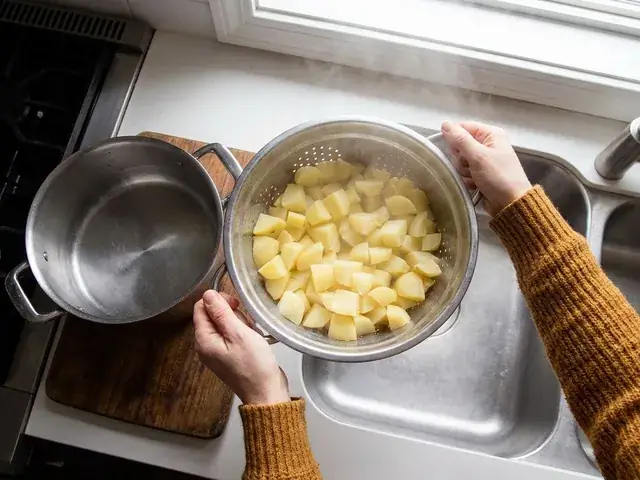
Cheese forgives a lot, but it cannot fix a wet mash. The mash here is the tested one: 900g of floury potatoes — Maris Piper or King Edward — boiled in salted water until tender, drained well, and given a minute or two to steam dry in the colander. That pause matters more with cheese coming, because melted cheese adds richness and a little moisture of its own.
Mash the potatoes with the 50g of butter until smooth, before any cheese goes in. If you are adding the optional pinch of nutmeg or teaspoon of English mustard from the recipe card, they go in now, with the butter — mustard in particular sits happily alongside Cheddar. Our guide to the best potatoes for cottage pie mash covers variety choice in full if you are working with what is in the cupboard.
Hold back most of the warm milk for the moment. The tested recipe uses about 75ml, but cheese stirred through the mash softens it, so add the milk after the cheese, a splash at a time, until the mash is soft and spreadable. You may not need it all. A mash that just holds its shape on a spoon is the one that ridges well and browns well.
Option one: cheese stirred through the mash
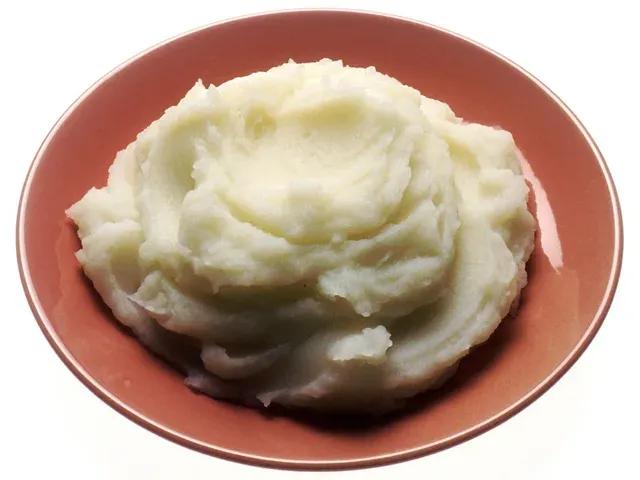
Take the pan of hot mash off the heat. Scatter the grated Cheddar over it and fold it through with a spoon or the masher until it has melted into the mash and no streaks remain. Off the heat is the important part: cheese stirred into mash over a burner, or into mash that is still bubbling, can split and turn oily. Mash that has just come off the boil is more than hot enough to melt grated cheese on its own.
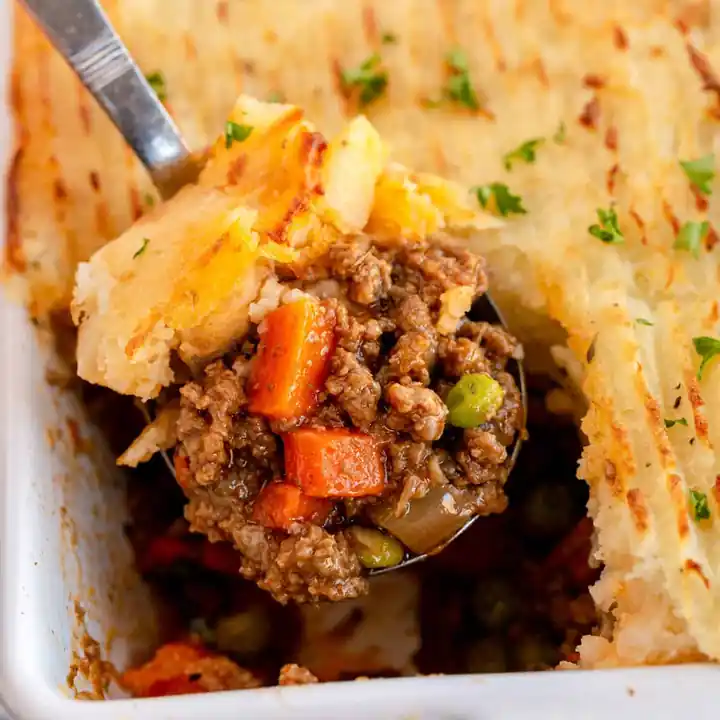
What you get is a topping that is seasoned and savoury all the way through, not just on the surface. Every forkful carries the cheese, including the soft underside where the mash meets the gravy — the part of the pie some people like best. The top still browns in the oven, because the butter and the ridged surface see to that, but the colour is paler and more even than a cheese-crusted top.
One adjustment is worth making: taste before you salt. Mature Cheddar brings salt of its own, and mash that was perfectly seasoned before the cheese went in can tip over afterwards. Add the cheese first, then decide.
Option two: cheese scattered on top
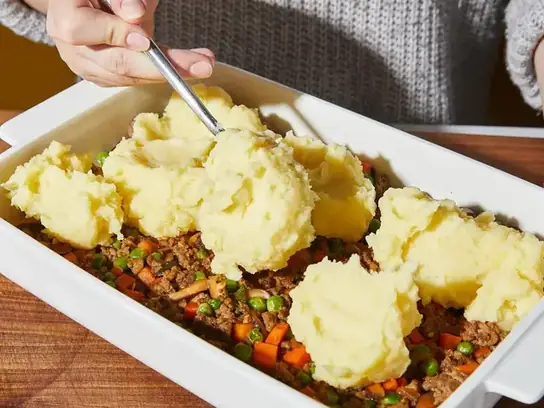
Here the mash is made exactly as tested — butter and warm milk, well seasoned — and spooned over the filling in the usual way. Spread it to the edges, ridge it thoroughly with a fork, and only then scatter the grated Cheddar over the surface, working it lightly into the ridges.
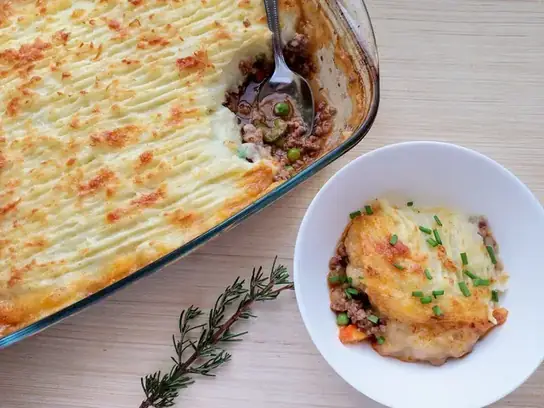
The ridges do the real work. Cheese that lands on the peaks catches the heat and turns crisp and deeply coloured; cheese in the valleys melts into the mash. The result is a lid with texture — crisp edges, soft pockets underneath — and a stronger cheese hit in each mouthful of topping, while the mash below stays plain.
Scatter the cheese as the last thing before the dish goes into the oven, not in advance. Grated cheese left sitting on warm mash while you do something else starts to sweat and clump, and it browns unevenly. Thirty seconds with the grater at the end is all it takes.
| Placement | Result | Watch out for |
|---|---|---|
| Through the mash | Cheese flavour in every bite; the whole topping is seasoned; the top browns gently and evenly | Add it off the heat or it can turn greasy; taste before salting; add the milk after the cheese, a little at a time |
| On top | A coloured, crisp lid with crisp ridge edges and soft melted pockets; a stronger cheese hit on the surface | Scatter it at the last moment; sparse patches brown unevenly; it can colour fast, so keep an eye on the last few minutes |
| Half and half (split the 50g) | A seasoned topping with a crisp cheese lid — the middle path, and the one most people land on | Neither effect is as strong as using all 50g one way; grate it all first so the split is easy |
Browning: the bake does most of it
No special treatment is needed to colour a cheese top. The tested bake — 25 to 30 minutes at 200°C conventional / 180°C fan / Gas Mark 6 — is long enough and hot enough to turn scattered Cheddar golden on the ridges, especially towards the edges of the dish. Cheese through the mash browns more gently, as plain mash does.
If the pie is cooked through and bubbling but you want a deeper colour on a cheese top, a short finish under a hot grill works — a couple of minutes as an estimate, and no walking away. Cheese goes from golden to burnt in well under a minute once it is close, and a grilled top needs watching from the moment the dish goes under. Count the grill as optional polish, not a step the recipe depends on.
Which cheeses melt well?
Mature Cheddar is the cheese on the tested recipe card, and it is the benchmark: it melts smoothly, it browns properly, and its flavour stands up to a rich beef gravy. If you only ever use one cheese on cottage pie, use that one.
Others work too, offered here as untested suggestions rather than tested swaps. Red Leicester melts much like Cheddar and gives a deeper orange colour. Gruyère melts smoothly and tastes nutty, good stirred through the mash. A hard, Parmesan-style cheese is too strong and dry to melt through mash happily, but a little finely grated over the top adds a sharp, savoury crust. Mozzarella melts into strings and tastes mild — it can also let out moisture, so it is better mixed with Cheddar than used alone. Very soft cheeses and blue cheeses change the character of the dish entirely; they are a deliberate choice, not a substitute, and are best kept out of the mash itself.
Whatever you choose, grate it yourself where you can. Bagged pre-grated cheese is coated to stop it clumping, and that coating can make it melt less smoothly, especially stirred through mash.
Cheese, making ahead and freezing
A cheese top is no obstacle to making the pie ahead or freezing it. Grated cheese freezes happily on top of the mash, baked or unbaked, and melts and browns as usual once the pie is defrosted in the fridge and cooked. Cheese stirred through the mash freezes just as well. The full method — cooling within 1 to 2 hours, wrapping, defrosting in the fridge and cooking within 24 hours of defrosting — is in our guide to freezing cottage pie.
One practical note for make-ahead pies with a cheese top: scatter the cheese just before baking rather than before chilling, if you can. It keeps better that way, and the top colours more evenly. If the pie was assembled in a rush with the cheese already on, it still bakes perfectly well — this is a preference, not a rule.
The cheese question, briefly
People sometimes ask whether cheese belongs on a cottage pie at all, and whether a shepherd's pie may have it instead. The names turn on the meat, not the topping: cottage pie is beef, shepherd's pie is lamb, and cheese is an optional extra on either. The full comparison, including the history and the cheese question, is in cottage pie vs shepherd's pie.
Questions people ask
The tested recipe card lists 50g of mature Cheddar as the optional amount for a pie serving four. That is enough to flavour the mash through, or to cover the top, or — split in half — to give a gentler version of both. More is not automatically better: past about double that, the topping starts to taste of cheese first and pie second, and the mash can turn greasy.
Both work, and they give different pies. Through the mash, the cheese seasons the whole topping and every bite tastes of it. On top, the mash stays plain and the cheese becomes a crisp, coloured lid. If you cannot decide, split the 50g — half folded through, half scattered over the ridges — and you get some of each.
Almost always because the cheese went into mash that was too hot or still over the heat. Cheese added off the heat, to mash that has just stopped steaming hard, melts in smoothly. Cheese stirred in over a burner, or boiled, splits and leaks oil. A very high proportion of cheese to potato can do it too — another reason the 50g measure works.
You can, and on top of the pie it behaves well enough. Stirred through mash it melts less smoothly, because pre-grated cheese is coated with an anti-caking agent to keep the shreds separate in the bag. Grating a block of mature Cheddar yourself takes a minute and gives a cleaner melt.
Yes. Cheese on top of the mash freezes happily, baked or unbaked, and cheese stirred through the mash freezes just as well. Cool the pie within 1 to 2 hours, wrap it well, defrost it in the fridge, and cook or reheat it within 24 hours, once, until steaming hot all the way through. Our freezing guide has the full method.
Mature Cheddar is the tested optional on the recipe card, and it earns the place: it melts smoothly, browns on the ridges, and its flavour stands up to beef gravy. Red Leicester and Gruyère are sound untested alternatives. Keep strong, dry cheeses for a light scattering on top rather than the mash itself, and expect mozzarella to need Cheddar alongside it for flavour.
Cheesy mash asks nothing new of the cook — the same tested pie, the same mash, and 50g of Cheddar placed where you want it to work. Start from the cottage pie recipe, look at the other toppings on the variations page, and decide whether your cheese belongs in the mash, on the ridges, or both.