
Cottage Pie Gravy: Building a Rich Beef Sauce
By Michael
The difference between a cottage pie that is merely fine and one people ask about is rarely the mash — it is the gravy underneath it. A rich beef sauce is not an ingredient you add; it is something you build, stage by stage, in the same pan as the mince.
Start with the browning — and keep what sticks
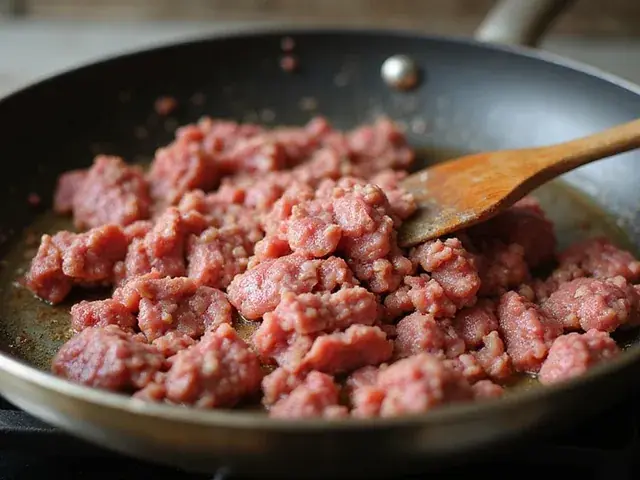
Everything in a good cottage pie gravy begins at the browning stage. When beef mince meets a hot, lightly oiled pan, its surface browns and develops the deep, savoury flavours that no stock cube can fully imitate. Those flavours come from the browning itself, and they develop best when the mince is left alone long enough to colour rather than being stirred constantly into grey submission.
Work in a single layer if you can, and let the first side take on real colour before you break the mince up. A pan that is too crowded steams the meat in its own juices instead of browning it, so if your pan is small, brown the mince in two batches and combine them afterwards. It takes a few minutes longer and pays for itself in every mouthful.
As the mince browns, a dark, crusty layer forms on the base of the pan. That layer has a name — the fond — and it is the single most valuable thing in the pan. Do not scrub it off, do not fear it, and do not mistake it for burnt food unless it has genuinely gone black and bitter. When the stock goes in later, the fond dissolves into the liquid and becomes the backbone of the gravy: colour, depth and that unmistakable beefy savouriness. Browning the mince and keeping the fond are, between them, most of what "rich gravy" actually means.
Cook out the tomato purée
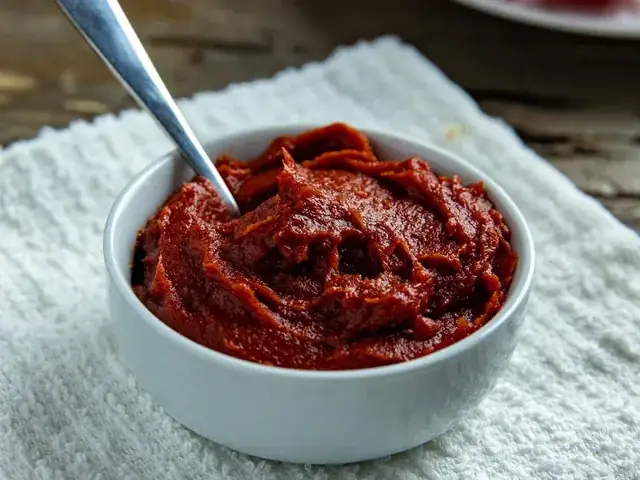
Tomato purée is in the recipe for depth, not for a tomato flavour — a finished cottage pie gravy should not taste of tomatoes. Two tablespoons go into the pan once the mince is browned and the onion, carrots and celery have softened, and they need a brief cook of their own: a minute or two, stirred through the hot mince, until the purée darkens slightly and smells sweet rather than sharp.
That short cook matters more than it looks. Raw purée stirred straight into stock can leave a tinny, acidic edge in the gravy. Cooked briefly in the fat of the pan, the purée mellows, its sugars deepen, and it dissolves into the background where it belongs — adding colour and a round, savoury base note that supports the beef instead of competing with it.
The building blocks, in order
| Building block | What it adds | When it goes in |
|---|---|---|
| Browned mince and the fond | Deep beef flavour and dark colour — the base of everything | First, in a hot pan, before any vegetables or liquid |
| Onion, carrot and celery, softened | Sweetness and body underneath the beef | After the mince, cooked in the same pan |
| Tomato purée, cooked out | Colour and a round savoury depth, not a tomato taste | Stirred through the mince and cooked for 1 to 2 minutes |
| Plain flour | Body — thickens the stock into a gravy that coats | Stirred into the mince before the stock, cooked briefly |
| Hot beef stock, 400ml | The liquid itself, and it lifts the fond off the pan | Gradually, stirring and scraping the pan as you pour |
| Worcestershire sauce and thyme | Background savouriness and a gentle herbal note | With the stock, so they simmer through the sauce |
| Frozen peas | Sweetness and colour, stirred through at the end | Last few minutes, so they stay bright |
| Salt and black pepper | The final balance | At the end, after reducing, tasting as you go |
The stock: hot, gradual, and scraped in
Our tested recipe uses 400ml of hot beef stock for 500g of mince, and two details of how it is added make a real difference. The stock is hot, so the pan never loses its momentum and the sauce comes back to a simmer quickly and evenly. And it is added gradually — a good splash first, stirred and scraped around the base of the pan so the fond lifts and dissolves, then the rest in stages, stirring as you go.
That first splash is doing the deglazing work: the liquid hits the hot pan, loosens the browned layer, and your spoon or spatula helps it along. By the time all the stock is in, the base of the pan should be clean and the liquid already a shade darker than the stock you poured. The quality of the stock matters here, because the gravy is mostly stock by volume — use the best you have, whether that is a good cube, a pot, or homemade, and taste before you assume it needs salt.
Flour's quiet role
One tablespoon of plain flour, stirred into the mince before the stock and cooked for about a minute, is what turns flavoured stock into gravy. It gives the sauce its body — the quality that lets it coat the mince and the back of a spoon rather than pooling like soup — without making it heavy or stodgy.
The timing is the point. Flour added at this stage cooks in the fat of the pan, loses its raw taste, and then thickens smoothly as the stock simmers. This page is about building the sauce well in the first place; if a finished sauce ever does come out too thin, the rescue methods live in our guide to thickening cottage pie filling.
Simmer gently, and let it reduce
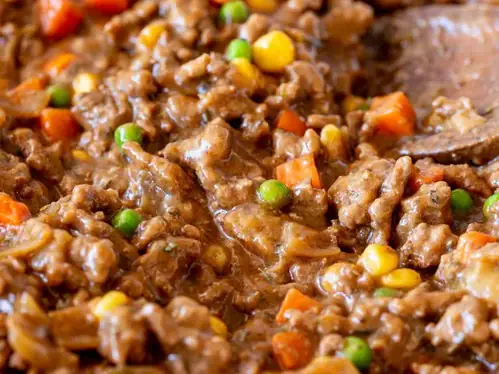
Once everything is in the pan, the gravy needs time more than attention. A gentle simmer — small bubbles breaking lazily at the surface — lets the flavours settle into each other and reduces the sauce slightly, concentrating it. In the tested recipe the filling simmers until the carrots are tender and the gravy has the body described in the method; stirring now and then keeps the base from catching.
Resist the urge to rush this stage with a hard boil. A fierce boil can make the sauce greasy and dull the flavours you have just built, while a patient simmer keeps the gravy glossy and clear-tasting. You are also cooking for texture here: the mince should stay distinct, the carrots soft but holding their shape, and the gravy thick enough to coat while still flowing.
Worcestershire sauce, thyme and the background notes
A tablespoon of Worcestershire sauce and a teaspoon of dried thyme (or a couple of fresh sprigs) go in with the stock, along with the bay leaf. None of them should be identifiable in the finished gravy. Worcestershire sauce adds a fermented, savoury depth that reads simply as "more beefy"; thyme gives a faint herbal warmth that belongs with beef and mash; the bay leaf contributes a background note you would only miss if it were gone.
That restraint is deliberate. A cottage pie gravy is a supporting sauce, not a showcase — it should make the beef taste more like itself. If you can pick out the Worcestershire sauce as a separate flavour, there is too much of it; added at this level, it disappears into the whole. The bay leaf comes out before the filling goes into the dish.
Season at the end, not the beginning
Stock varies. One cube is saltier than another, homemade stock may carry almost no salt at all, and a sauce that reduces concentrates whatever salt is in it. That is why the tested recipe seasons properly at the end: simmer first, taste, then add salt and black pepper a little at a time until the gravy tastes rounded rather than flat.
Taste with a clean spoon and judge the sauce on its own, bearing in mind it will be eaten under mash — which in our recipe is seasoned too, but mildly. A gravy that tastes just right in the pan will taste right in the pie; one that tastes slightly under-seasoned in the pan will taste bland at the table, because the mash dilutes every bite. If you overshoot with salt, a splash of hot water and a minute of simmering softens the mistake.
The finish: peas, a rest, and the bake
The frozen peas — 100g in the tested recipe — go in near the end, needing only a few minutes in the hot sauce. Stirred in late, they stay bright green and sweet instead of fading into the background. Then the filling goes into the dish, about 2.5 to 3 litres, the mash goes over the top, and the pie bakes at 200°C (180°C fan, Gas Mark 6) for 25 to 30 minutes, until the top is golden and the gravy bubbles up at the edges. Resting the pie for 5 to 10 minutes lets the sauce settle so the portions hold together when you serve them.

A note on testing
Everything described here is the method of our cottage pie recipe — the one recipe on this site that has been cooked exactly as written and kitchen-tested, with the quantities given above. Explanations of why each stage works are standard cooking knowledge rather than separate experiments, and where this page suggests timings for individual stages, such as cooking out the purée, treat them as guidance in line with the tested method rather than new tested claims.
Questions people ask
Three things, in order: browning the mince properly and keeping the fond that forms in the pan, cooking the tomato purée briefly so it deepens instead of tasting raw, and simmering the sauce long enough to reduce and concentrate. Gravy built that way tastes rich because the flavour is cooked in, not because anything extra was added at the end.
You can stir a spoonful of granules into the stock if that is what you have, and the pie will still work. The trade-off is flavour: granules give you thickness and colour quickly, but they cannot replace the fond from browning the mince, which is where most of the depth comes from. If you use them, add less salt than usual, as granules are usually well seasoned already.
Almost always because the purée went in with the liquid instead of being cooked first. Two tablespoons of purée stirred through the hot, browned mince for a minute or two loses its sharp, tinny edge and melts into the background as colour and depth. Stirred straight into stock, the same amount stays recognisably tomatoey in the finished sauce.
Hot, as in our tested recipe. Hot stock keeps the pan at temperature so the sauce returns to a simmer evenly, and it helps lift the fond from the base of the pan as you stir. Cold stock will still work, but the sauce takes longer to come together and the browning on the pan is slower to dissolve into it.
One tablespoon for a pie built on 500g of mince and 400ml of stock, as in our recipe. At that level you should not be able to taste it as a separate ingredient — it simply makes the beef taste beefier. If you can identify it in the finished gravy, use a little less next time; if the sauce tastes flat, check the salt before adding more.
Yes — the sauce is made with the filling, and the whole filling keeps well. Cool it and refrigerate it within 1 to 2 hours, keep the fridge between 0 and 5°C, and use it within 2 days. Reheat only once, until steaming hot all the way through, whether you reheat the filling on the hob before assembling or bake the finished pie until it is bubbling throughout.