
How Long to Bake Cottage Pie: Hot Filling and Chilled Pies
By Michael
"How long does it bake?" sounds like a question with one answer, but cottage pie does not start every bake in the same state. A pie assembled hot from the hob and a pie taken straight from the fridge are different jobs, and the clock treats them differently.

Start with the tested figure
Every timing in this guide hangs off one reliable anchor. In the tested recipe — serves 4, beef filling made with 500g of mince and 400ml of hot beef stock, topped with mash from 900g of floury potatoes, in a dish of about 2.5 to 3 litres — the pie is assembled while the filling is still hot and baked at 200°C (180°C fan, Gas Mark 6) for 25 to 30 minutes, then rested for 5 to 10 minutes before serving.
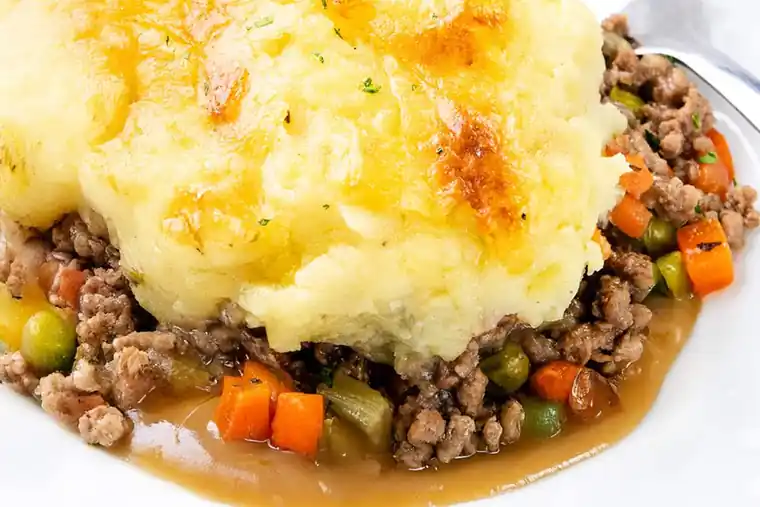
Why does it take only half an hour? Because most of the pie is already cooked and hot when it goes in. The filling has simmered on the hob; the mash has just been made from boiling potatoes. The oven's work is narrower than people assume: bring everything together to a steady, bubbling heat, and turn the forked ridges of the mash golden and crisp at the peaks. That is a finishing job, not a cooking-from-raw job, and half an hour is plenty for it.
Hold on to that logic, because it explains every other row in the table below. Change the starting temperature and you change the oven's workload. A chilled pie asks the oven to do the heating-up work as well as the finishing work — and cold mash and cold filling, in a cold dish, take real time to come through. The golden top can look ready long before the centre is, which is why this guide keeps returning to checks rather than times.

Bake times by starting state
| Starting state | Oven | Time | Notes |
|---|---|---|---|
| Assembled hot (the tested recipe) | 200°C / 180°C fan / Gas Mark 6 | 25 to 30 minutes | Kitchen tested. Filling and mash both hot at assembly. |
| Assembled and chilled in the fridge | 200°C / 180°C fan / Gas Mark 6 | About 40 to 50 minutes (estimate) | Judge by the checks below, not the clock. The centre lags well behind the top. |
| Individual portions, hot filling | 200°C / 180°C fan / Gas Mark 6 | About 20 to 25 minutes (estimate) | Small dishes heat through faster; watch the ridges, which brown quickly. |
| Frozen | — | Defrost in the fridge first, then bake as chilled (estimate) | Do not bake from frozen; defrost in the fridge and cook or eat within 24 hours. |
Only the first row is a tested time. The others are estimates built from that anchor — a full-size chilled pie carries roughly fifteen to twenty extra minutes of heating-up work — and they are starting points for your judgement, not guarantees. Dish material matters too: a thick ceramic or glass dish warms more slowly than a thin metal one, so the same pie can sit at either end of the estimate range depending on what it is baked in. When in doubt, trust the probe.
The checks that matter more than the clock
A cottage pie tells you when it is done, in three ways, and you should look for all of them — especially on a chilled pie, where the top can mislead you.
Bubbling at the edges and centre. The filling should be visibly bubbling — not just at one corner, but around the edges and, on a pie that is truly through, breaking through or trembling at the centre too. Bubbling means the filling has reached a simmer, which means heat has travelled all the way in. No bubbles at the centre means the middle is still catching up, however brown the top looks.
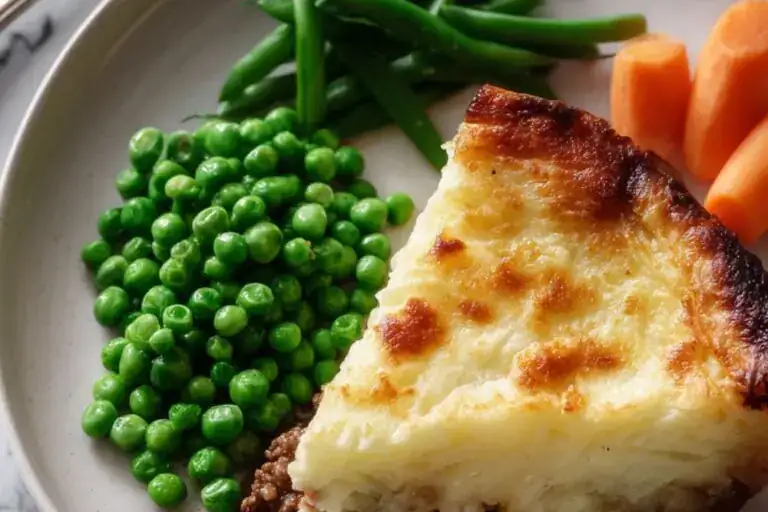
A golden top. The forked ridges should be golden with darker, crisp tips. Pale mash that has merely warmed through is a sign the pie went in cold and the oven has spent its time on the middle rather than the finish — give it longer, and if the centre is already bubbling but the top refuses to colour, a few minutes under a hot grill sorts it.
A probe reading of at least 75°C in the centre. This is the check that settles arguments. Push a food probe or meat thermometer into the middle of the pie, into the filling layer, and look for at least 75°C. It matters most for chilled and reheated pies, where the filling was cooked once already and must be properly hot all the way through — and it matters on any pie where the bubbling is hard to judge, such as one under a thick blanket of mash.

Fan or conventional: what actually changes
The tested recipe gives both settings — 200°C conventional, 180°C fan, Gas Mark 6 — and they are meant to do the same job. A fan oven moves hot air over the dish, so it cooks effectively hotter at the same dial setting; the standard 20-degree reduction compensates for that. Use the setting that matches your oven, and do not stack both ideas by putting a fan oven at 200°C, which will brown the mash ridges before a chilled pie's centre has caught up.
One practical difference is worth knowing: fan ovens tend to colour the top a little more evenly and a little sooner. On a long chilled bake (estimate), if the top is racing ahead while the centre still lags, cover the dish loosely with foil for the middle stretch and take it off for the last ten minutes so the ridges can crisp. Conventional ovens are slightly gentler on top, and the foil trick is rarely needed — but keep it in mind for any pie that looks done before it probes done.
Chilled pies: the make-ahead bake
The chilled row of the table is the one that belongs to planners. If you assemble a pie earlier in the day or the day before — the full method is in our guide to making cottage pie ahead — it goes into the oven cold, in a cold dish, and needs about 40 to 50 minutes (estimate) at the same oven settings. Two habits make that bake reliable. First, keep the pie in its dish in the fridge rather than on the worktop; food safety is not a detail here, and the fridge should be between 0 and 5°C. Second, do not serve it on the timer's word. Give it the full span, then check for bubbling at the centre and probe for at least 75°C before it leaves the oven.
A cold ceramic or glass dish also deserves a thought: putting an icy glass dish into a fiercely hot oven is a thermal shock some dishes dislike. A few minutes on the worktop while the oven heats — not a long stand, just while it comes up to temperature — takes the worst of the chill off the dish itself without giving the food a head start at room temperature.
Frozen pies: defrost first, then treat as chilled
It is tempting to bake a cottage pie straight from frozen, and this guide is not going to give you a time for it, because it is the wrong approach for a dish this dense. The outside would be overdone long before the centre thawed, let alone reached a safe temperature. Defrost the pie in the fridge — a full-size pie needs a good long spell, overnight at least — and cook or eat it within 24 hours of defrosting. From there it is simply a chilled pie: about 40 to 50 minutes (estimate), judged by bubbling at the centre and a probe reading of at least 75°C.
Resting is part of the bake
Whichever row of the table your pie came from, it is not finished when the oven door opens. The tested recipe rests the pie for 5 to 10 minutes, and that rest earns its place. Straight from the oven the filling is at a rolling bubble and runs like sauce; after a short rest it settles, thickens slightly as it comes off the boil, and serves in portions that hold their shape on the plate. The pie stays properly hot through the rest — it has an insulating blanket of mash and a hot dish under it — so there is no need to rush it to the table at the cost of sloppy portions.
Baking is not reheating
One last distinction, because the two jobs get confused. Everything above is about baking a pie — assembled from cooked components, but going through its first bake, whether hot or chilled. Warming up a portion of pie that has already been baked, cooled and stored is reheating, and it follows stricter rules: reheat only once, until steaming hot all the way through. That job has its own methods and timings for the oven, hob and microwave, covered in our guide to how to reheat cottage pie — use that page for leftovers, and this one for pies going into the oven to be baked.
Questions people ask
Look for the filling bubbling at the centre as well as the edges, then confirm with a food probe pushed into the middle of the filling: it should read at least 75°C. Bubbling alone can mislead on a pie with a thick top, so the probe is the check to trust.
The pie almost certainly went into the oven chilled, and the top coloured on schedule while the centre lagged behind — a fan oven set too high makes it worse. Next time use the chilled timing, about 40 to 50 minutes (estimate), and if the top races ahead, cover it loosely with foil until the centre catches up. This time, simply give it longer and probe before serving.
It is not recommended for a dish this dense: the outside overcooks before the centre thaws. Defrost the pie in the fridge, cook or eat it within 24 hours of defrosting, and then bake it as a chilled pie — about 40 to 50 minutes (estimate), checking the centre reaches at least 75°C.
Not the time, just the setting: 180°C fan does the same job as 200°C conventional (Gas Mark 6), because the moving air cooks more efficiently. Keep the tested 25 to 30 minutes for a hot assembly, and be aware a fan colours the top a little sooner, which matters on longer chilled bakes (estimate).
The filling leaves the oven at a rolling bubble and pours like sauce. Five to 10 minutes of resting lets it settle and thicken slightly, so portions hold their shape instead of spreading across the plate. The pie stays piping hot under its mash blanket, so nothing is lost.
No. Baking a chilled pie is its first bake — the components were cooked, but the pie itself has not been baked before. Reheating means warming a pie that was already baked and stored, and that must be done only once, until it is steaming hot all the way through.